






The short version: pack light, pack soft
The Ha Giang Loop is a motorbike trip, not a resort holiday. Everything you bring rides with you — strapped to a bike, on your back, or in a small day bag on your lap if you ride pillion. The golden rule is simple: one soft bag, not a suitcase.
A rigid suitcase will not strap neatly to a motorbike, will not fit in a homestay room built for backpacks, and will annoy you on every stop. Bring a soft duffel or a backpack of 30–40 litres for the loop itself, and leave the rest behind — Vega’s group tour includes free luggage storage at its hostel during the tour, so your main suitcase does not need to come along at all.
The checklist below is written for the classic 3-day loop, and it works for the 4-day version too — just add one more set of clothes. Items marked “don’t pack” are things travellers commonly bring and never use.
Documents & money: the non-negotiables
These go in a waterproof pouch you keep on your person, not in a bag strapped to the bike.
- Passport — you will need it for hotel and homestay check-ins, and police checkpoints on the loop do happen. Carry the original, not just a photo of it.
- Driving licence + International Driving Permit (IDP) — only if you plan to ride yourself. Vietnam recognises only the 1968-convention IDP, with the motorcycle category stamped, carried together with your home motorcycle licence. If you ride easy rider or travel by car, you do not need either — but bring your passport regardless. Our full guide explains the rule: Do You Need an IDP for the Ha Giang Loop?
- Travel insurance details — the policy number, the insurer’s emergency phone number, and written confirmation that it covers you on a motorbike in Vietnam (as a driver if you self-drive, as a passenger if you ride pillion). Many standard policies exclude motorbikes entirely. Personal travel insurance is not included in Vega’s tour price, so this one is on you.
- Booking confirmation — your tour confirmation and the pickup details. Vega’s group tours pick up in Hanoi’s Old Quarter or at the airport at 11:00, 15:30 or 19:00 the day before the loop starts.
- Cash in Vietnamese dong — ATMs exist in Ha Giang City and Dong Van town, but not in the villages in between, and card payments are rare once you leave the towns. Bring enough dong for drinks, snacks, souvenirs and small extras for the whole loop. A few small notes are useful for market stalls and roadside coffee stops.
- Copies, digital and paper — a phone photo of your passport, licence and insurance, plus one paper photocopy kept separately from the originals. If your phone gets wet or lost, the paper copy still works.
Riding gear: what keeps you safe and comfortable
You will spend 4–6 hours a day on a bike, on mountain roads, in sun, wind, fog and possibly rain. Comfort here is safety: a cold, wet or sunburnt rider makes worse decisions.
- A helmet that fits — check what your tour provides before you book. Ask explicitly: is a helmet included, and can you try it on before departure? If you are self-driving, bring or rent a full-face helmet if you can; a loose, thin rental helmet is the one item not worth compromising on.
- A windproof, warm jacket — even in summer, mountain passes are cool and windy, and descents at speed multiply the wind chill. A light waterproof shell over a fleece does the job for most of the year; in winter (December to February) you need a genuinely warm layer.
- Closed shoes with grip — sturdy trainers or light boots. No sandals, no flip-flops: you need grip for gravel stops and protection if the bike tips at low speed.
- Gloves — light riding gloves protect against wind, sun and vibration, and save your palms if you come off at walking pace.
- Sunglasses or riding glasses — sun, dust and insects at 50 km/h. If you wear contact lenses, bring glasses as backup: mountain wind dries lenses out fast.
- Sunscreen and lip balm — the sun at altitude is stronger than it feels, especially on the open passes. Reapply at every stop.
- Rain gear — a light rain jacket and rain trousers, or at minimum a poncho that covers you and your bag. Rain can arrive in any month and is a daily possibility from June to August. A dry bag or plastic bags inside your backpack keep clothes and electronics dry even if the rain finds a way in.
- A neck scarf or buff — cheap, light, and surprisingly useful: sun protection, dust mask, warmth on cold descents, and a towel in a pinch.
Don’t pack: heavy motorcycle boots and armoured jackets unless you already own and love them. On a guided loop at group pace, good trainers, gloves and layers are enough — and they pack far smaller.
Clothes & overnight bag: 3 days in one soft bag
Homestays are simple and welcoming, not hotels: expect a bed, blankets, a shared bathroom and a family dinner, not a wardrobe and a hairdryer. Pack for that reality.
- 2–3 sets of quick-dry clothes — T-shirts, one long-sleeved top for sun and cool evenings, and trousers you can ride in. Clothes dry overnight in most seasons if you hang them up.
- One warm layer for evenings — a fleece or hoodie. Village evenings are cool year-round, and cold in winter.
- Sleepwear — homestay dorms are shared and blankets are provided, but your own sleepwear and a light travel sheet or sleeping-bag liner add comfort and warmth.
- Swimwear — for the Du Gia waterfall stop on the 3-day route, and for any river swimming in the warmer months. A microfibre towel packs small and dries fast.
- A small day bag — a 10–15 litre daypack or dry bag for the things you want during riding hours: water, sunscreen, phone, cash, rain jacket. Everything else stays strapped to the bike.
- Toiletries, travel-size — toothbrush, sunscreen, insect repellent, any medication you need (plus a copy of the prescription), and hand sanitiser. Shops in the towns sell basics, but not everything, and not in every village.
Don’t pack: a hairdryer, straighteners, more than one pair of “evening” shoes, or anything you would mind getting dusty. The loop is dusty, and your bag will show it.
Luggage: what to leave behind
This is the part most first-timers get wrong, and it is easy to get right.
- Leave your main suitcase behind. Vega’s group tour stores luggage free of charge at its hostel while you are on the loop, and you can shower there after the tour before your onward bus. Ask your operator the same question if you book elsewhere: most Ha Giang operators and Hanoi hotels offer the same service, but confirm it before you arrive with a suitcase and no plan.
- Pack a soft bag for the loop. Soft duffels and backpacks strap to a bike rack, squash into homestay rooms and survive rain better than hard cases.
- Keep valuables on your person. Passport, cash, cards, phone and camera ride in your day bag or jacket, never in luggage strapped to the bike.
- Label your bag. Groups share a support vehicle or a pile of identical backpacks at homestays. A bright strap or tag saves the nightly “whose bag is this” game.
Seasonal extras: adjust for the month you travel
The loop changes character with the seasons, and your bag should too. Our month-by-month guide has the full picture: Best Time to Do the Ha Giang Loop.
- December to February (cold and foggy): add a proper warm jacket, a beanie, warm socks and an extra base layer. Temperatures at altitude drop below 10°C, and fog can cut visibility to a few metres. Hand warmers are a small luxury worth their weight.
- March to May (spring): layers you can add and remove through the day — mornings are cool, middays warm. A light rain shell is still wise.
- June to August (wet season): prioritise rain gear and waterproofing: rain jacket and trousers, dry bags for everything, and shoes that grip when wet. Roads are slippery and landslides can close sections, so flexibility matters more than extra clothes.
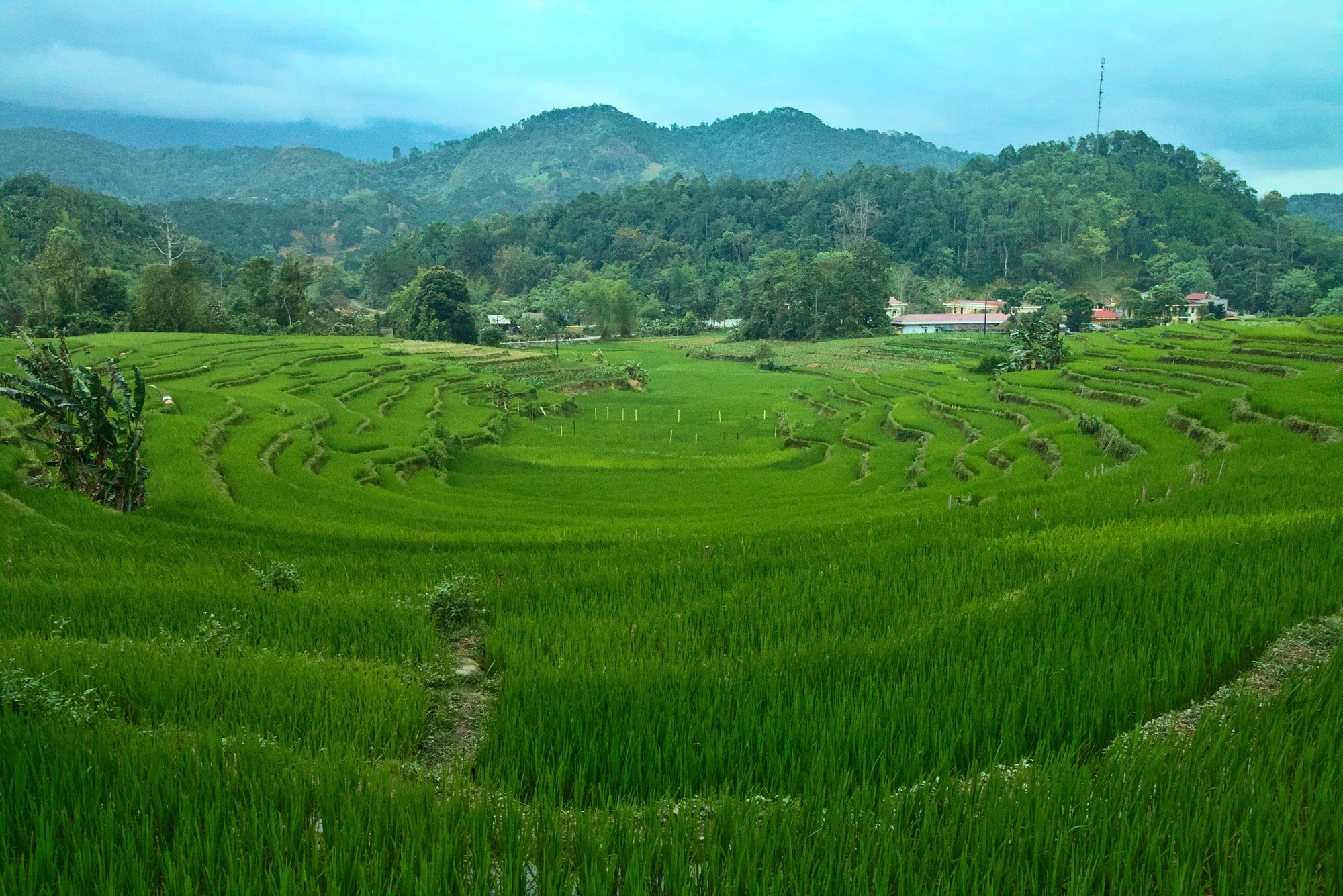
- September to November (harvest and buckwheat season): the most popular window, and the most photogenic. Sun protection matters more than warmth, but bring one warm layer for the passes and evenings — and a camera with space for a lot of photos.
Tech, health & small things worth their weight
- Phone + charger + power bank — you will use your phone for photos, maps and messages, and charging opportunities at homestays are shared and limited. A power bank charged each night keeps you independent.
- A basic first-aid kit — plasters, antiseptic, painkillers, antihistamines, diarrhoea tablets and any personal medication. Pharmacies exist in the towns, not in the villages.
- Motion-sickness tablets — if winding mountain roads affect you, take them before the passes, not after you feel ill. This applies to car and jeep passengers too.
- A reusable water bottle — meals on Vega’s group tour are included, and drinking water is easy to buy, but a bottle you refill cuts plastic and is always at hand on the bike.
- Earplugs — homestay dorms and village mornings start early. Roosters do not respect lie-ins.
- Snacks for the road — a few energy bars or nuts for the stretches between stops. Lunches and dinners are covered on the group tour, but a hungry rider is an impatient rider.
Don’t pack: a drone without checking the rules first (many areas restrict them), expensive jewellery, or a laptop. The loop is not kind to any of them.
What Vega’s tour already provides — so you don’t pack it
If you book Vega’s 3-day group tour, the price (from $215) already includes the things travellers most often worry about packing: the motorbike and its fuel, an English-speaking guide, an experienced easy rider driver if you ride pillion, all meals during the tour, a dorm bed the night before departure, all entrance fees, and the return transfer between Hanoi and Ha Giang. Luggage storage during the tour and a shower afterwards are included too, and every guest gets a Ha Giang Loop T-shirt.
What it does not include: drinks, personal expenses, and — importantly — personal travel insurance. That last one is the item to sort before you leave home, not on the road. And if you want a specific type of helmet or protective gear, ask Vega before you book: the tour page lists the inclusions above, and anything beyond them is worth confirming in advance rather than assuming.
See the full itinerary and current price on the tour page: Ha Giang Loop 3 Days 2 Nights Group Tour.
Preparation checklist: the week before you go
Packing is only half the preparation. Run through this list in the week before departure:
- Confirm your booking and pickup — time (11:00, 15:30 or 19:00), place (Old Quarter or airport), and what to do if your flight or bus is delayed.
- Sort your licence and insurance — if self-driving, check your IDP is the 1968 version with the motorcycle category; email your insurer and keep the reply confirming motorbike cover.
- Check the weather — look at the forecast for Ha Giang City and Dong Van, not just Hanoi. Pack for the coldest and wettest day in the forecast, not the average.
- Decide your format — easy rider, self-drive or car/jeep? If you are unsure, our comparison sets out who each format suits: Easy Rider vs Self-Drive vs Private Car.
- Charge everything, copy everything — phone, power bank, camera; photos of passport, licence and insurance on your phone and one paper copy.
- Tell someone your plan — your route, your operator’s name and your expected return date. Phone signal is patchy in the mountains, and a known itinerary is a safety net.
- Withdraw dong in Hanoi — enough for the whole loop, in mixed notes.
Frequently asked questions
Can I bring a suitcase on the Ha Giang Loop?
You can bring one to Ha Giang, but you should not ride with it. Leave it in storage — Vega’s group tour stores luggage free at its hostel during the tour — and ride with one soft bag of 30–40 litres.
Do I need to bring my own helmet?
Ask your operator before you book. Confirm whether a helmet is included and whether you can try it on before departure. If you are self-driving and own a good full-face helmet, bringing it is never a bad idea.
What should I wear on the bike?
Layers: a T-shirt, a long-sleeved top, a windproof jacket, long trousers, closed shoes with grip, gloves and sunglasses. Add a warm layer for evenings and a rain shell in every season.
How much cash should I bring?
Enough dong for drinks, snacks and small extras for the whole loop — ATMs are only in Ha Giang City and Dong Van town, and most village stops are cash-only. Mixed small notes are the most useful.
Is there phone signal on the loop?
Patchy. Towns and viewpoints usually have signal; valleys and remote stretches often do not. Download offline maps before you leave Ha Giang City, and do not rely on live navigation alone.
Photo credits: featured image and in-article photos via Wikimedia Commons — see captions. Tour inclusions and prices checked against Vega’s live tour page on 28 October 2026; prices and inclusions can change, so confirm at booking.