“When should I do the Ha Giang Loop?” is the second question in almost every enquiry we receive — right after “How many days do I need?” (that’s our 3 days vs 4 days comparison, if you haven’t decided yet).
Here’s the honest answer, from an operator that runs the loop all year round: there is no bad month — only different months. The loop never closes for a season. But the scenery, the roads and the crowds change dramatically from January to December, and the right month depends on what you want to see.
The short answer
- October and November — our top pick for most travellers. Dry roads, mild temperatures, golden rice fading into buckwheat flower season (mid-October to early November). Yes, it’s the busiest period — book ahead.
- March to May — the easiest riding. Cool, dry spring air, the clearest skies of the year, blossom in March and flooded terraces in April–May. Our pick if you want the best riding conditions.
- June to August — the rainy season. Rideable, but the most demanding: hot, humid, sudden downpours, slippery roads and a real landslide risk. Go with a professional team, not solo.
- December to February — the quiet season. Cold (often below 10°C in the highlands), morning mist, empty roads. Atmospheric and cheap-feeling — but pack real winter gear.
If you skim nothing else: pick October–November for scenery, March–May for the best riding, and avoid self-driving in July–August unless you’re an experienced rider.
Ha Giang Loop weather, month by month
| Month | Weather | Scenery highlight | Riding conditions | Crowds |
|---|---|---|---|---|
| January | Cold (5–15°C), often misty | Peach and plum blossom begins | Fog can cut visibility on passes; pack layers | Low |
| February | Cold, gradually clearing | Blossom continues; Tet festivities | Improving; cold mornings | Medium (Tet period) |
| March | Cool (15–22°C), dry | Peak blossom, mustard flowers; clearest air | Excellent — among the best riding months | Medium |
| April | Warming (18–26°C), showers start | Water-pouring season begins: terraces flooded, mirroring the sky | Very good | Medium |
| May | Warm, humid | Young rice going in; vivid green | Good, but heat builds by midday | Medium-low |
| June | Hot, sudden downpours | Everything vivid green | Challenging — slippery when wet | Low |
| July | Wettest month | Green terraces, dramatic cloud | Toughest month: landslide risk, low visibility | Lowest |
| August | Rain easing late in the month | Rice starts to colour late August | Improving, still unpredictable | Low |
| September | Drying out | Rice harvest — terraces go gold | Good, improving fast | Medium |
| October | Dry, mild (22–25°C) | Gold rice + first buckwheat | Excellent | High |
| November | Dry, cool (15–25°C) | Buckwheat at its peak + flower festival | Excellent — roads at their best | Highest |
| December | Cold, misty | Last buckwheat, mustard fields | Quiet but cold; fog on high passes | Low |
Temperatures are indicative daytime ranges for the highlands (800–1,600 m elevation). Conditions vary a lot with altitude — you can start a ride in valley fog and be above the clouds on Ma Pi Leng an hour later. Layer clothing, always.
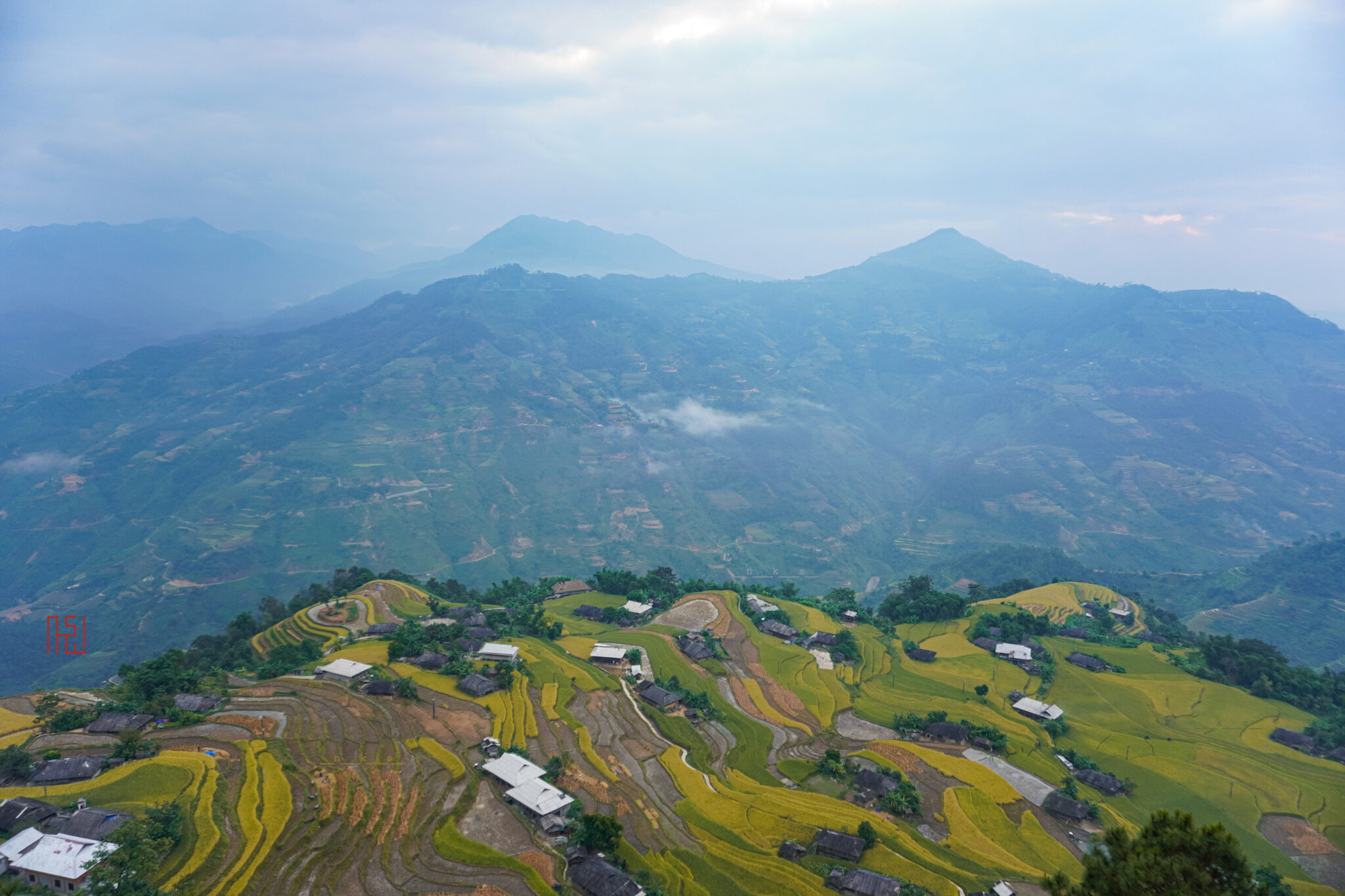
Photo: NKSTTSSHNVN, via Wikimedia Commons, licensed under CC BY-SA 4.0.
Spring (March–May): the easiest riding
If we had to pick the safest, most comfortable months for beginners, spring wins. Rain is low, the air is dry, and visibility across the Dong Van Karst Plateau is at its best.
- March is the single prettiest spring month: white plum and pink peach blossom across the H’mong villages, yellow mustard flowers along the roads, and temperatures cool enough to ride all day without exhaustion.
- April and May bring the water-pouring season — terraces are flooded and act like mirrors for the sky, then the young rice goes in and everything turns vivid green. Afternoon showers start, but they’re short.
- Spring is also festival season in the highlands — the famous Khau Vai Love Market traditionally takes place in the third lunar month, drawing ethnic communities together in their most colourful dress.
- Why guides like spring: this is when the roads are most forgiving. Wet corners are the main cause of slides on the loop, and spring simply has fewer of them. If you’re a beginner deciding between easy rider and self-drive, spring is the most forgiving season to self-ride.
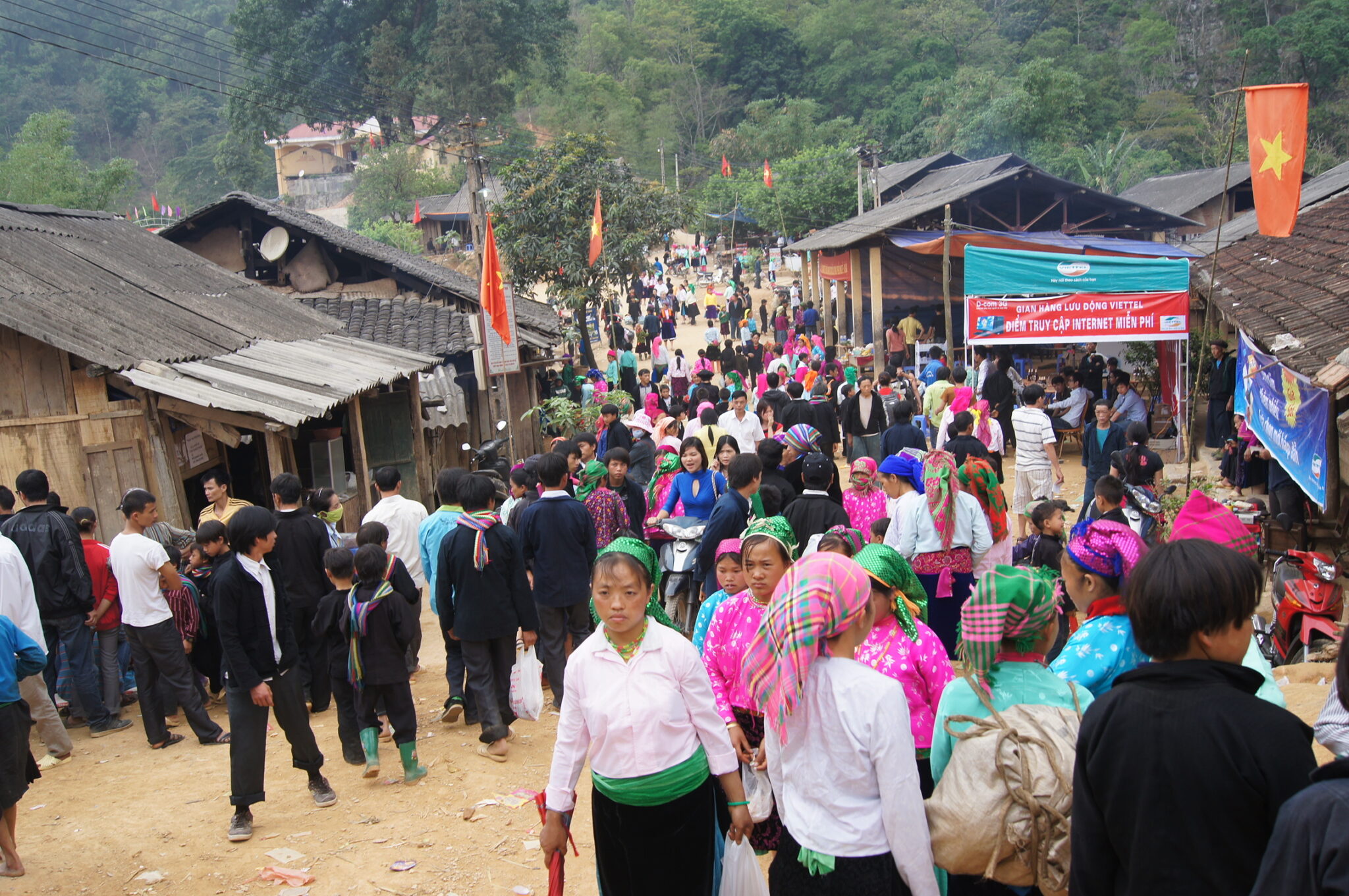
Photo: Hoangvantoanajc, via Wikimedia Commons, licensed under CC BY-SA 3.0.
Summer (June–August): the rainy season
Summer is when the loop is at its wildest — and we say that with respect, not romance. July is the wettest month, and the Ma Pi Leng area can see sudden, heavy downpours that turn mountain corners slick in minutes. Landslides are a real hazard, especially around Meo Vac, and local authorities sometimes have to clear blocked sections after storms.
We do still run tours in summer — the loop doesn’t stop. But how we run them changes: our guides check road conditions each morning, slow the pace, avoid the worst-hit sections when needed, and can reshuffle the route if a pass is unsafe. Self-drivers don’t have that safety net, which is exactly why we recommend easy rider over self-drive for the wet months.
The upside of summer: it is the greenest the loop ever gets, and the fewest travellers of the year are on the road. If your dates are fixed and it has to be summer, book with a professional team, stay flexible on the route, and skip the trip entirely on days when guides say the roads aren’t safe.
Autumn (September–November): the golden season
This is the season the postcards are made in — and the busiest three months on the loop. If the scenery is your top priority, this is when to come.
- September — harvest season. The terraces turn from green to deep gold. Note: the most famous golden terraces are at Hoang Su Phi, slightly off the main loop — ask us about adding it.
- October — the best all-rounder. Dry, mild (22–25°C), rice still golden early in the month, and the first buckwheat flowers appearing. Expect company: this is peak season.
- November — buckwheat flower season at its peak. Pink and white buckwheat blankets the rocky hillsides around Dong Van, Sung La and Lung Cu for a few short weeks. The Buckwheat Flower Festival usually lands in November.
One practical warning: because this is the famous season, accommodation in Dong Van and Meo Vac fills up fast in October and November — book your tour (or at least your beds) well ahead.
Winter (December–February): the quiet season
Winter on the loop is for travellers who’d trade sunshine for atmosphere. Expect cold mornings (often below 10°C in the highlands), valley fog that burns off by mid-morning, and empty roads. The karst landscape looks at its most dramatic in the mist.
It’s genuinely beautiful — karst peaks rising through fog, mustard fields in December, the last buckwheat hanging on, and H’mong villages going about winter life. You’ll have viewpoints to yourself.
- Pack real winter layers. A hoodie is not enough. Wind on a motorbike multiplies the cold, and you’ll be riding through cloud at 1,500 m. Thermal base layer, windproof jacket, gloves.
- Start late. We don’t rush winter departures; waiting for the fog to lift at 9:00 instead of leaving at 7:30 makes the riding safer and the views better.
- Tet (Vietnamese Lunar New Year, usually late January or February) is a special case: blossom still out, markets at their liveliest, but transport and accommodation book out — plan well ahead.
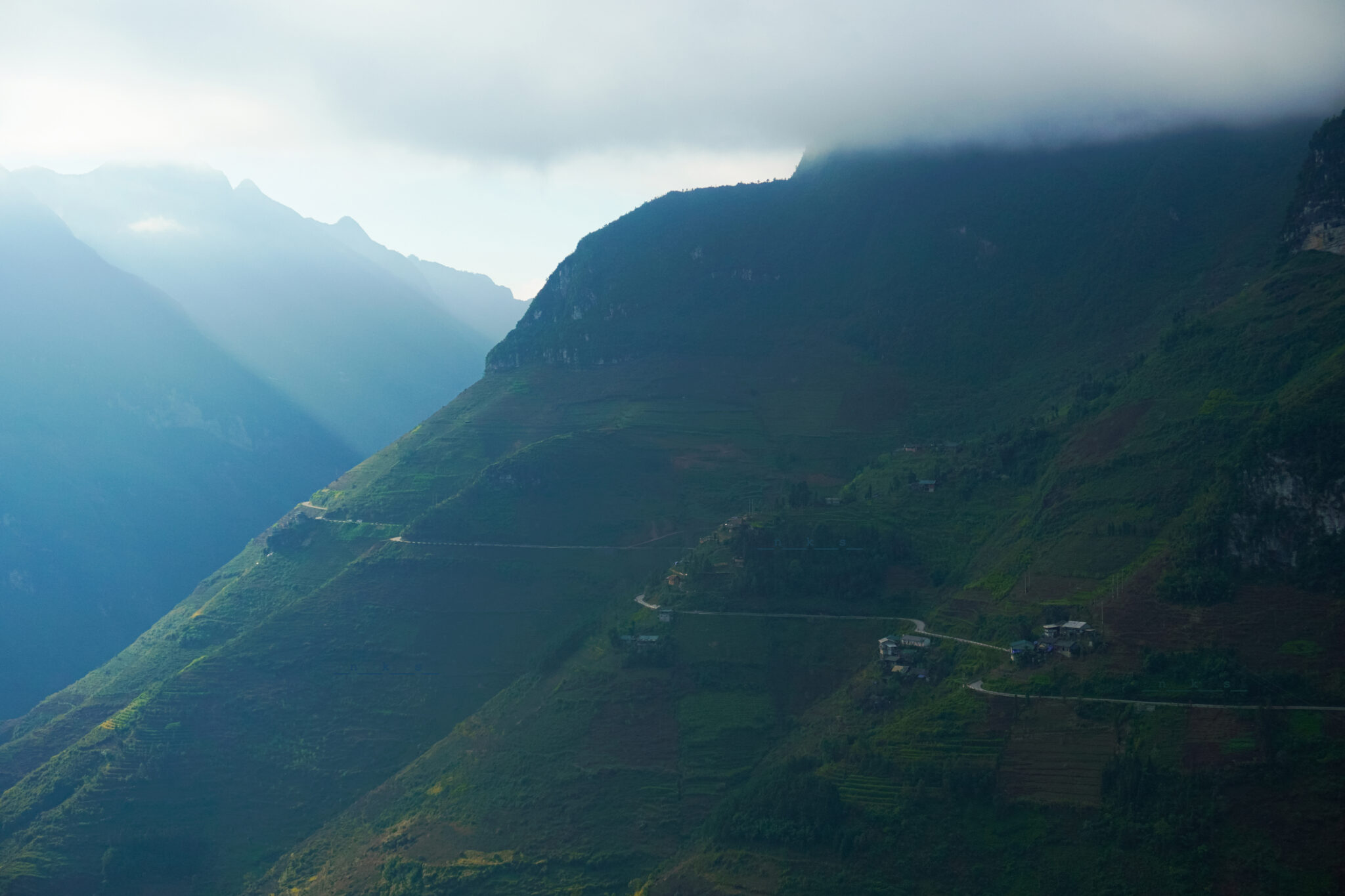
Photo: NKSTTSSHNVN, via Wikimedia Commons, licensed under CC BY-SA 4.0.
If you can only pick one window
Our recommendation for first-timers: October to November. You get the best combination the loop offers — dry grippy roads, the most dramatic seasonal scenery, and the full festival atmosphere. Book early.
Our recommendation for confident riders who dislike crowds: March to April. Nearly as good weather, the clearest skies of the year, blossom and flooded terraces — with a fraction of the autumn traffic.
Either way, the length of your trip matters as much as the month: our 3-day vs 4-day itinerary comparison breaks down which pace suits which traveller. And whatever the season, start your planning from the Ha Giang Loop overview to see how the tours actually run.
How the season affects your ride — and what we do about it
Season isn’t just scenery; it changes how the loop must be ridden. This is where an operator that runs year-round earns its keep:
- Wet season (June–August): shorter riding days, flexible routing, and professional riders on every bike. We check conditions every morning and won’t send a group over a pass that isn’t safe.
- Cold season (December–February): later starts, more warm-up stops, and honest gear advice before you ever reach Ha Giang City.
- Peak season (October–November): advance-booked accommodation so you’re not hunting for a bed in a full Dong Van at 9 p.m.
All our group departures — including the 3 days / 2 nights group tour — run on this year-round footing. The itinerary is the same; the safety margins move with the season.
For the full picture — route, costs, licences and safety — see our Ultimate Guide to the Ha Giang Loop.
FAQ: best time for the Ha Giang Loop
What is the best month to do the Ha Giang Loop?
October and November are the consensus pick: dry weather, comfortable temperatures (22–25°C in October, cooler in November), and the best scenery of the year — golden rice fading into buckwheat flower season. March and April are the best alternative: drier, quieter, with blossom and flooded terraces.
When is buckwheat flower season in Ha Giang?
Buckwheat (hoa tam giác mạch) usually blooms from mid-October to early November, peaking around late October and early November in the Dong Van Karst Plateau — around Dong Van, Sung La and Lung Cu. The Buckwheat Flower Festival is typically held in Dong Van in November. Check local bloom reports just before departure; heavy rain during bloom can shorten the prime window.
Can you do the Ha Giang Loop in December?
Yes — December is rideable and one of the quietest months. Expect cold mornings (often below 10°C in the highlands), valley fog until mid-morning, and the last buckwheat plus yellow mustard fields. Pack proper winter layers and start riding later in the morning; sunshine is not guaranteed.
Should I avoid the rainy season (June–August)?
You don’t have to avoid it, but respect it. Heavy rain makes mountain corners slippery and raises the landslide risk, especially in July. If you travel then, book with an experienced operator rather than self-riding, stay flexible on the route, and postpone riding on days when local guides say it’s unsafe.
Is the loop open all year?
Yes. The Ha Giang Loop runs year-round — there is no official season and no month when the roads close by default. Only the conditions change: scenery, rain, temperature and crowds.
How far ahead should I book for October–November?
For the October–November peak, book your tour or accommodation at least 2–3 weeks ahead — Dong Van and Meo Vac sell out. In other months, a few days’ notice is usually fine. Our group tours reserve stays well in advance year-round.
Seasonal notes in this guide were last reviewed in October 2026. Bloom dates, harvest timing and weather are indicative — conditions vary by year, so it’s always worth a quick check with us before you lock in dates.