


The question every traveller asks us
“How many days do I need for the Ha Giang Loop?” is the first question in almost every enquiry we receive — ahead of price, ahead of easy rider versus self-drive, ahead of the weather.
Here is the short answer: three days covers the complete essential loop; four days covers the same loop plus the far north, at a much more relaxed pace. The price difference between our two group departures is small ($215 vs $238 per person), so this decision is really about your time and your travel style — not your budget.
Below are both itineraries day by day, built from the tours we actually run from Hanoi, so you can compare them stop by stop.
The short answer
- Choose 3 days if your Vietnam itinerary is tight, you want every headline stop (Ma Pi Leng, the Nho Que River, Dong Van, Quan Ba) and you are comfortable with one long riding day.
- Choose 4 days if you can spare the extra day. You get everything the 3-day loop covers, plus Lung Cu (Vietnam’s northernmost point), a Dao village homestay at Nam Dam, the Lung Khuy cave, unhurried mornings — and a far better chance of catching Dong Van’s famous Sunday market.
Neither option repeats anything: the fourth day is all new ground, not a slower rerun of the same road.
The loop both options share
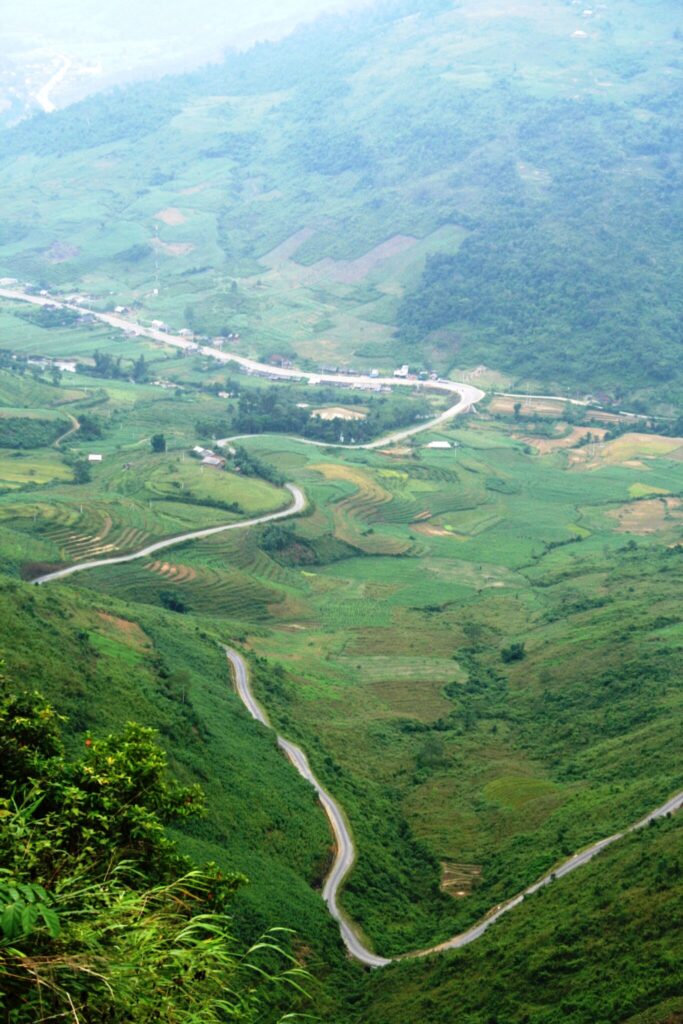
The Ha Giang Loop is one road system of roughly 330–370 km, depending on the exact route: Ha Giang City, up through Thai An to Du Gia, across to Meo Vac, over the Ma Pi Leng Pass above the Nho Que River, on to Dong Van, then back south through the H’mong King’s Palace, Tham Ma Pass and Quan Ba’s Heaven Gate to Ha Giang City.
One thing to know about our group tours: we run the loop Du Gia first — Day 1 heads from Ha Giang City to the Du Gia valley, and the return leg comes back through Dong Van and Quan Ba. Some operators run it the other way round (Quan Ba first); the stops are the same, only the order changes. Everything below follows our actual running itineraries, not a generic template.
The 3-day itinerary, day by day
| Route | Distance | The day in brief | |
|---|---|---|---|
| Day 0 | Hanoi → Ha Giang (night bus) | ~300 km, ~7 h | Pickup 11:00 / 15:30 / 19:00 in the Hanoi Old Quarter or at the airport; free dorm bed at our hostel on arrival, luggage stored free |
| Day 1 | Ha Giang → Thai An → Du Gia | ~80 km | Cat Ly Viewpoint, lunch in Thai An village, the Duong Thuong valley road, Lung Ho Viewpoint, swim at Du Gia Waterfall, homestay dinner |
| Day 2 | Du Gia → Meo Vac → Ma Pi Leng → Dong Van | ~100 km | Quiet mountain roads to Meo Vac, lunch at Sung Trai, boat ride on the Nho Que River through Tu San Canyon, the Ma Pi Leng Pass, evening in Dong Van Old Quarter |
| Day 3 | Dong Van → Ha Giang | ~150 km | H’mong King’s Palace at Sa Phin, Tham Ma Pass S-curves, lunch in Yen Minh, Lung Tam weaving village, Quan Ba Heaven Gate and the Twin Mountains; back in Ha Giang City by 17:00; night bus to Hanoi (or onward to Sapa, Ha Long, Cat Ba, Ninh Binh) at 18:00/19:00 |
Day 3 is the demanding one — about 150 km with the most stops packed in. It is absolutely doable (thousands of our guests do it every year), but it is a full day in the saddle from breakfast at 08:00 to arrival at 17:00. If that sounds like a lot, the 4-day pace was designed for you.
The 4-day itinerary, day by day
The first two days are identical to the 3-day loop. The difference is what happens after Dong Van.
| Route | Distance | The day in brief | |
|---|---|---|---|
| Day 0 | Hanoi → Ha Giang (night bus) | ~300 km, ~7 h | Same arrangement as the 3-day tour |
| Day 1 | Ha Giang → Thai An → Du Gia | ~80 km | Same as the 3-day tour — with a little more time at the Du Gia Waterfall |
| Day 2 | Du Gia → Meo Vac → Ma Pi Leng → Dong Van | ~100 km | Same as the 3-day tour |
| Day 3 | Dong Van → Lung Cu → Nam Dam | ~130 km | Lung Cu Flagpole at Vietnam’s northernmost point, H’mong King’s Palace, Tham Ma Pass, overnight in a Dao homestay at Nam Dam village |
| Day 4 | Nam Dam → Ha Giang | ~60 km | Lung Khuy Cave (30-minute hike to stalactite chambers), Lung Tam weaving village, Quan Ba Heaven Gate; back in Ha Giang City by 16:00; night bus at 18:00/19:00 |
Notice the shape of the 4-day tour: the two big riding days (Days 1–2) are unchanged, and the extra day splits the long final push into two easy stages. Day 4 is only ~60 km — practically a rest day with sightseeing.

What the fourth day actually buys you
It is worth being specific, because “an extra day” undersells it. The 4-day loop adds three places the 3-day loop never reaches:
Lung Cu — the top of Vietnam. The flagpole at Lung Cu marks the country’s northernmost point, with views across the border into China. It is a 1.5-hour detour north of Dong Van that the 3-day schedule simply cannot fit. For many travellers it becomes the photo of the trip.

Nam Dam — a village, not a viewpoint. This Dao ethnic village is where the 4-day tour sleeps on night 3: a family homestay, home-cooked dinner, optional herbal bath, and a morning walk through the village before the road calls. The 3-day loop passes plenty of villages; the 4-day loop lets you wake up in one.
Lung Khuy Cave. A 30-minute uphill walk from the road leads to one of Ha Giang’s most impressive stalactite caves — the kind of stop that gets cut first when a schedule is tight.
And then there is the invisible upgrade: pace. On the 4-day tour, nobody is watching the clock at the Nho Que boat dock or skipping the second coffee in Dong Van. Mornings start when they start. If you are travelling with a camera, with kids, or with parents, that matters more than any single viewpoint.
One more timing advantage: Dong Van’s ethnic market happens every Sunday morning. On the 3-day loop you pass through Dong Van with no control over the weekday. The 4-day loop’s extra flexibility — and our private departures, which can be timed deliberately — gives you a far better shot at seeing hundreds of H’mong, Tay, Dao and Nung traders in full traditional dress, which is genuinely one of the great sights of northern Vietnam.
3 days or 4 days — who should pick which?
| Pick 3 days if… | Pick 4 days if… |
|---|---|
| Your Vietnam trip is 10 days or less and every day counts | You have 2+ weeks in Vietnam and can spend 4 days in the mountains |
| You want the headline stops and are happy with a full schedule | You want the headline stops plus the far north and village life |
| A long day in the saddle (~150 km on Day 3) sounds fine | You prefer shorter riding days and slow mornings |
| You are watching the budget (saves $23 vs the 4-day tour) | $23 extra for a full extra day of tour, meals and accommodation is an easy yes |
| You are an experienced rider doing self-drive and pace is not an issue | You are a self-drive rider who wants to arrive fresh, not fried, each evening |
A note on self-drive: the licence rules are the same either way — a full motorcycle licence plus a 1968-convention IDP with the motorcycle category, or the easy rider seat instead. Our full guide explains it: Do You Need an IDP for the Ha Giang Loop? But the format question interacts with the duration question: self-riders feel Day 3 of the 3-day loop far more than easy riders do. If you are riding yourself and can spare the day, take the 4-day option.
The honest trade-offs nobody mentions
The 3-day loop’s Day 3 is long. We say it plainly in the table above because some operators don’t: ~150 km, a dozen stops, 08:00 to 17:00. Most people love it — it is a triumphant final day — but if you are prone to saddle soreness or you simply dislike rushed mornings, don’t book the 3-day tour hoping it will feel leisurely.
The 4-day loop costs a day of your wider trip. Ha Giang rewards the extra day, but Vietnam is full of places competing for it — Ha Long Bay, Sapa, Hoi An. If the loop means cutting a day somewhere you care about more, the 3-day loop loses nothing essential.
Both tours include the same core inclusions. English-speaking guide, easy rider drivers, all meals, dorm beds (private room upgrades on request), motorbikes and fuel, entrance fees, the pre-tour dorm night in Ha Giang, luggage storage, the Hanoi–Ha Giang transfers and the Ha Giang Loop T-shirt. Drinks, personal expenses and travel insurance are on you either way.
Practical notes: the “Day 0” that makes both work
Whichever duration you pick, the loop starts the same way: an overnight bus or car from Hanoi to Ha Giang City (~300 km, about 7 hours), with pickups at 11:00, 15:30 or 19:00 from the Hanoi Old Quarter or the airport. You sleep in a free dorm bed at our hostel, store your big luggage there during the loop, and start riding the next morning — departures leave Ha Giang around 08:30–09:00.
Coming back, both tours end in Ha Giang City in the late afternoon (17:00 for the 3-day, 16:00 for the 4-day), with return buses at 18:00 and 19:00 from the RAW Hostel — to Hanoi, or onward to Sapa, Ha Long, Cat Ba or Ninh Binh if your trip continues north.
FAQ
Can I do the Ha Giang Loop in 2 days?
Technically yes — we run a 2-day private tour for travellers who genuinely cannot spare more. But 2 days means skipping major stops and spending most of both days riding. If you have 3 days, take 3.
Is 5 days too slow for the loop?
Not at all — on a private tour we can stretch the route with extra village time, trekking or a second night in Du Gia or Dong Van. Our scheduled group departures are 3 and 4 days because those are the sweet spots most travellers choose.
Which duration is better in the rainy season (June–August)?
The 4-day option. Mountain rain slows everything down — wet roads, longer photo stops, the occasional reroute. The 3-day schedule has little slack; the 4-day schedule absorbs weather without dropping stops.
Does the extra day change the price much?
Barely. At the time of writing (October 2026), the 3-day group tour is $215 per person and the 4-day group tour is $238 — $23 for an extra full day of guiding, meals, accommodation and riding. Check the tour pages for current prices.
Will I see the Sunday market?
Dong Van’s ethnic market runs every Sunday morning. Whether you catch it depends on which weekday your tour passes through Dong Van — ask us when you enquire and we’ll tell you honestly whether your dates line up, or suggest a private departure timed for it.
Our recommendation
If you asked our guides — the people who ride this loop every week — most would say four days. The loop’s best moments are unhurried ones: the second hour at the Nho Que River, the morning mist lifting over Nam Dam, a market you didn’t plan for. Three days gives you the loop; four days gives you the loop and the reason people come back.
But a rushed traveller on the 3-day loop still sees more of Vietnam’s most dramatic road than most visitors ever will. Pick the duration your itinerary allows, and don’t second-guess it.
- Ha Giang Loop 3 Days 2 Nights — Group Tour ($215): view the full itinerary
- Ha Giang Loop 4 Days 3 Nights — Group Tour ($238): view the full itinerary
- Still deciding how to ride? Easy Rider vs Self-Drive vs Private Car, compared
- Riding yourself? Check the licence rules first: Do You Need an IDP for the Ha Giang Loop?
Prices and pickup times above are from our tour pages as published in October 2026 — the definitive figures are always on the tour page itself.

