


Cat Ba is an island, so there is one fact every route from Hanoi shares: the last stretch is always a boat or a cable car. There is no bridge to Cat Ba Town, and no bus or car drives all the way. The good news is that the trip is short and well organised — about 130–150 km by road from Hanoi to the coast, then a quick crossing, for a total of 3 to 3.5 hours door to door on the easiest options. A combined bus-plus-crossing ticket costs roughly $11–17 per person one way, with hotel pickup in Hanoi’s Old Quarter and drop-off in Cat Ba Town included.
This guide compares every realistic way to get there — and explains how the same trip works if your real destination is Lan Ha Bay, which you reach from Cat Ba’s Ben Beo pier or on an overnight cruise from Ha Long.
At a glance: Hanoi to Cat Ba compared
| Option | Time | Price (one way, per person unless noted) | Best for |
|---|---|---|---|
| Combined bus + ferry/speedboat | 3–3.5 hours | From $11 (tourist bus) / $17 (VIP limousine) | Most travellers — simplest, cheapest |
| Bus + cable car | ~3.5 hours | $13–19 (bundle); cable car alone 70,000 VND | The view, and skipping the ferry queue |
| Train + ferry/speedboat | 5–6 hours | ~$15–20 all in | Slow travel, a stop in Hai Phong |
| Private car + ferry | 3–3.5 hours | From ~$120 per vehicle | Families, groups, flexible timing |
| Motorbike (self-ride) | 4–5 hours | ~$10–15 (fuel + ferry) | Experienced riders only |
| Cruise/tour with transfer included | 3–3.5 hours to the pier | From $155/person (UniCharm 2D1N) | Zero logistics — Lan Ha Bay is the goal |
Prices are market rates observed in November 2026 — confirm with the operator before you book, as schedules and fares shift by season.
Option 1: Combined bus + ferry or speedboat (easiest for most people)
This is the option almost every independent traveller should choose. You buy one through ticket, a bus picks you up at your hotel in Hanoi’s Old Quarter, drives about 2.5 hours to the coast at Cat Hai, and the same company handles the crossing and the final bus across Cat Ba Island to your hotel in town. You never deal with a pier, a ticket counter, or a taxi in between.
The main operators are Good Morning Cat Ba and Cat Ba Express, with several departures a day, roughly from 07:30 to the late afternoon. Good Morning Cat Ba lists a tourist shuttle at $11 one way and a VIP limousine bus at $17 (round trip $22/$34), including the bus, the crossing and the on-island transfer. Cat Ba Express charges around $14–15 for a similar service.
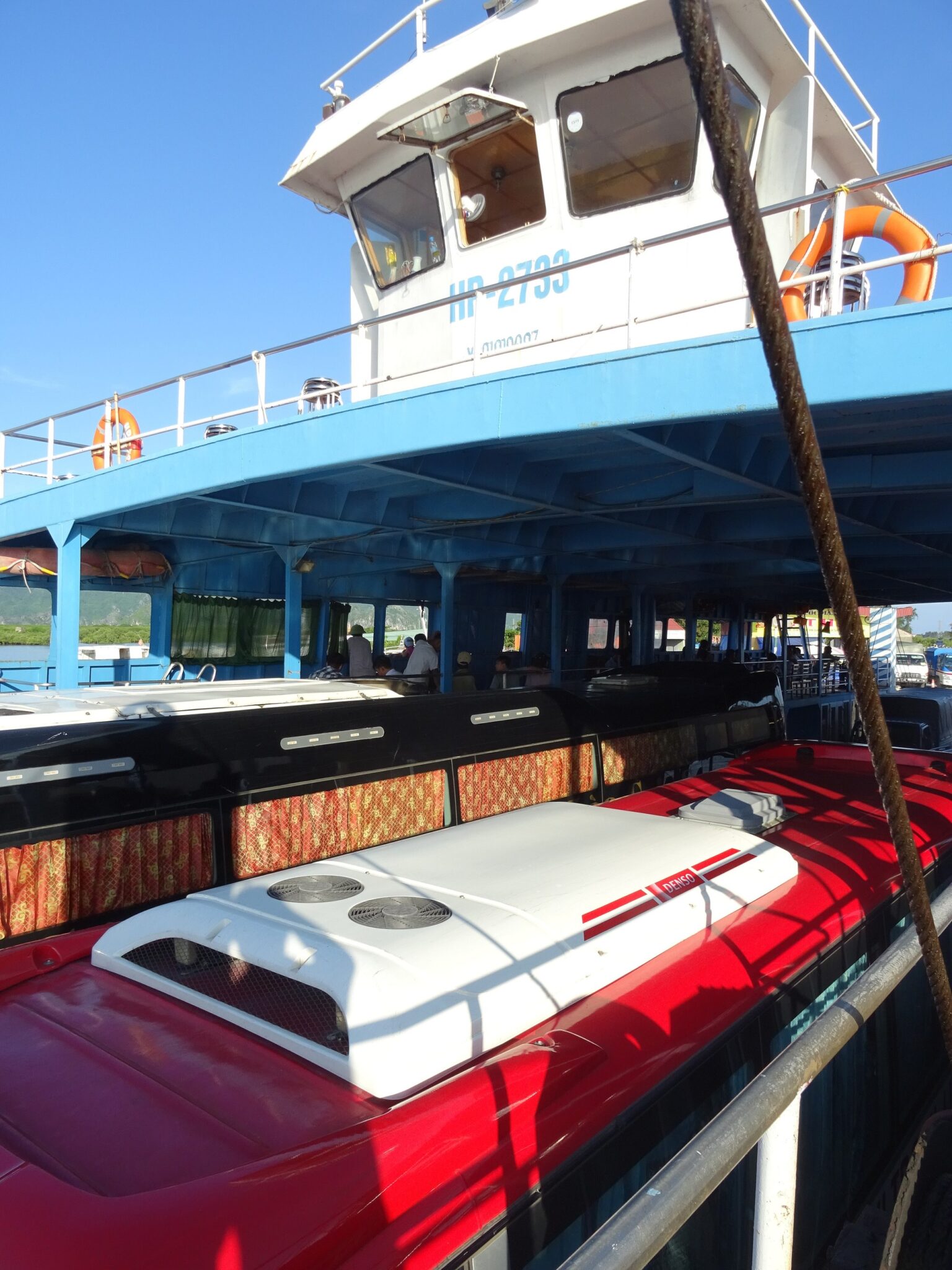
The crossing itself is usually a speedboat — about 5–7 minutes across the water — or the car ferry from Dong Bai pier to Cai Vieng pier (40–50 minutes). Either way, a bus is waiting on the island for the 22–25 km, 30–45 minute drive into Cat Ba Town.
One warning that saves real confusion: the ferry no longer leaves from Got pier. Got closed to public ferries in March 2024, and the public ferry moved to the bigger Dong Bai terminal, about 3–5 km away, right next to the Sun World cable car station. Many older guides — and some drivers — still say “Got”. If you are arranging your own transport, set your destination to Dong Bai pier, not Got.
Option 2: Bus + cable car (the scenic crossing)
If boats are not your thing, or you simply want the view, the final stretch can be done by cable car instead. The Cat Hai–Phu Long cable car runs 3,955 m across the water in 10–15 minutes, on a line whose tallest pylon (214.8 m) is among the highest of its kind in the world. A one-way ticket costs 70,000 VND (about $2.75; 67,000 VND booked online).
In practice, most people buy this as a bundle too: a bus from Hanoi plus the cable car, roughly $13–19 one way (Good Morning Cat Ba adds $2 per person for the cable-car version of its ticket). From Phu Long station, a shuttle bus continues into Cat Ba Town, or to the central bay area.
Three limits to know before you choose this option. First, the cable car takes foot passengers only — no motorbikes, no cars. Second, it runs only during the day, roughly 08:30 to 15:45, with departures about once an hour. Third, the schedule can change for weather or maintenance, so check Sun World’s operations page the day before you travel. If you are arriving late in the afternoon, or travelling with a vehicle, take the ferry instead.
Option 3: Train to Hai Phong, then ferry or speedboat
The slowest option, and the one to pick only if you actually want the journey to be part of the trip. Trains from Hanoi to Hai Phong take 2.5–3 hours. From Hai Phong you still need to reach the coast and cross: a speedboat from Ben Binh pier takes 40–60 minutes and costs around 250,000 VND, or you can take a coach to Dong Bai pier and catch the Dong Bai–Cai Vieng ferry, where a foot passenger pays only about 12,000–14,000 VND.
All in, allow 5–6 hours and roughly $15–20. It is a pleasant, unhurried way to arrive — and a useful fallback if the direct buses are sold out — but for most travellers the combined bus ticket is faster, cheaper and simpler.
Option 4: Private car (families and groups)
A private car with driver costs from about $120 one way per vehicle (confirm the quote before booking — rates vary by car size and season). The drive from Hanoi takes around 2.5–3 hours, and the car itself crosses on the Dong Bai–Cai Vieng car ferry (about 190,000 VND for a car under 9 seats), so you keep your luggage with you and set your own departure time.
This makes most sense for families with children, groups of four or more, or anyone arriving late — the car waits for you, and there is no queue at a bus departure point. One honest caveat: the car does not make the trip faster. You drive the same road, wait for the same ferry, and cross the same water — you are paying for privacy and flexibility, not speed.
Option 5: Riding yourself, and arriving from Ha Long
Experienced riders sometimes ride a motorbike from Hanoi: roughly 4–5 hours including the ferry, with a motorbike ferry ticket of about 45,000 VND. But the Hanoi–Hai Phong expressway is busy, ferry queues in peak season (May–August) are long, and the final 25 km across Cat Ba is winding mountain road. If you are not already comfortable riding in Vietnamese traffic, do not make this your first ride in the country.
Coming from the other direction is easy too. If you are combining Ha Long Bay and Cat Ba, the ferry from Tuan Chau Island to Gia Luan on the north of Cat Ba takes 1.5–2 hours (speedboats do it in 45–60 minutes). The crossing is scenic — more like a short Ha Long Bay cruise than a transfer — and Gia Luan is a good starting point for the island’s northern roads and the national park.
Arriving on Cat Ba: the last 25 km
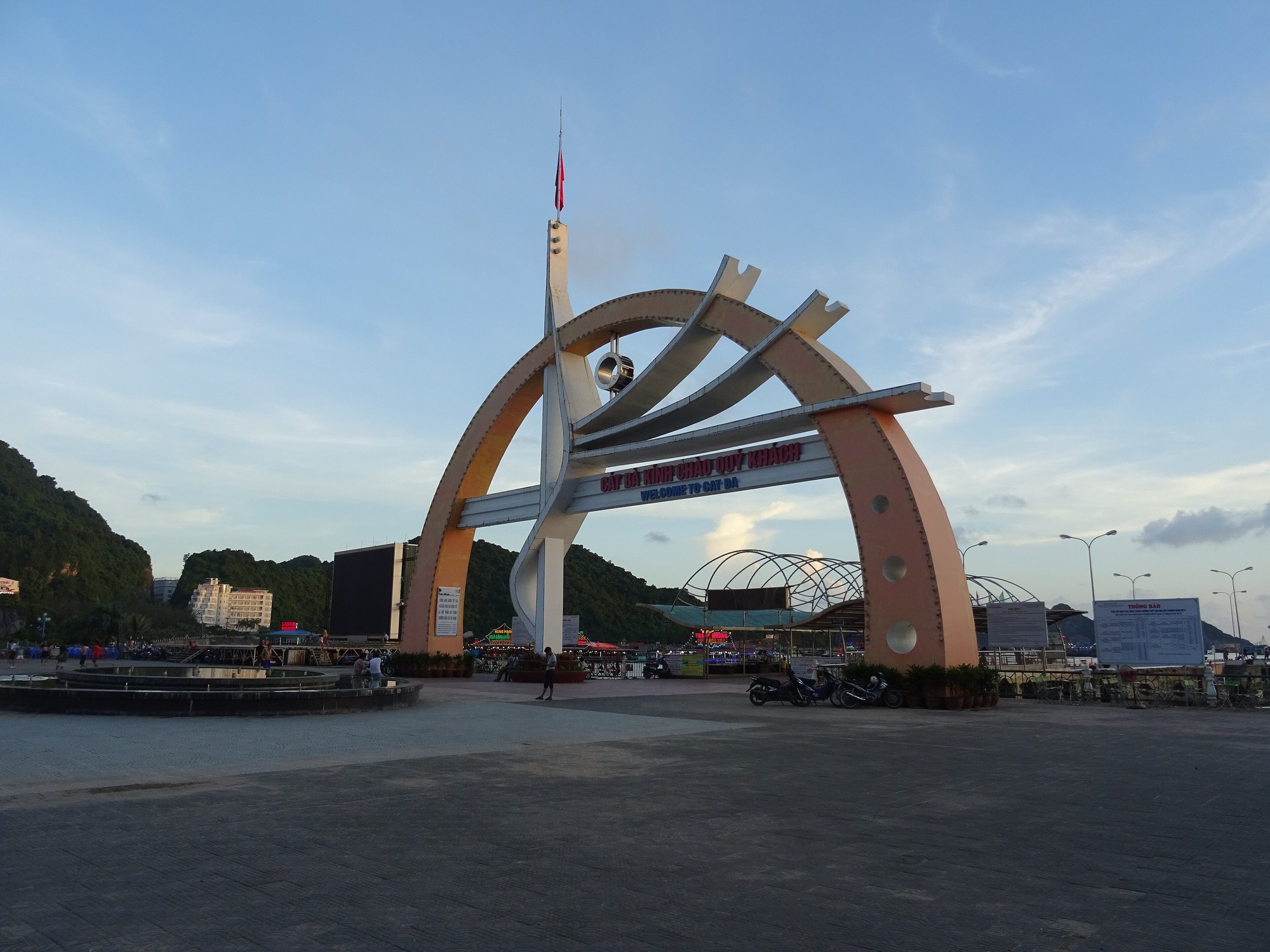
Whatever crossing you choose, remember that Cai Vieng pier is not Cat Ba Town. It sits on the north of the island, and the town — where the hotels, restaurants and beaches are — is another 22–25 km, roughly 30–45 minutes by road. Through tickets include this leg. If you are travelling independently, local bus 14 runs from the town out to the pier (and stops at the cable car station) about every 45 minutes for around 13,000 VND; a taxi for the same run costs up to about 300,000 VND.

The zero-hassle option: let the tour handle the transfer
If Lan Ha Bay is the point of the trip rather than Cat Ba Town itself, the simplest “transport” is not to arrange any. Cruises and tours from Hanoi include the transfer, so the bus, the pier and the timing are the operator’s problem.
Vega’s UniCharm 2D1N cruise picks up in Hanoi’s Old Quarter between 08:00 and 08:30, drives about 3 hours to Tuan Chau Island, and boards in Ha Long Bay — no ferry to Cat Ba needed, because the cruise itself sails the hidden route into Lan Ha Bay. Prices start from $155 per person for a Deluxe sea view room, including the shared transfer, guide, kayaking and meals. You are back in Hanoi between 15:00 and 15:30 on day two.
For travellers who want the island as well as the bay, Vega’s Cat Ba Private 2D1N tour picks up at 07:30, crosses to the island by car and ferry, treks in Cat Ba National Park and visits Viet Hai village by bike, then spends day two kayaking on Lan Ha Bay — returning to Hanoi around 19:00–19:30. Prices start from $169 per person for a group of five or more ($259 per person for two travellers), including the private car, private boat, guide, 3-star hotel and meals.
Either way, you skip the pier, the ticket counter and the “which Got?” confusion entirely — worth weighing against the $11–17 a DIY ticket saves.
Practical tips
- Book ahead in peak season. Between June and August, morning buses out of Hanoi fill up, especially at weekends. Book the day before at the latest.
- Mind the last departure. The cable car stops mid-afternoon (around 15:45) and the last ferries run in the early evening. Do not plan a late-afternoon arrival without a confirmed ticket.
- Use Dong Bai, not Got. Old guides still send travellers to Got pier. The public ferry leaves from Dong Bai, next to the cable car station.
- Keep a buffer if you are connecting to a cruise. If your cruise boards at Tuan Chau at 13:00, take a morning bus — a missed connection on the island side is hard to fix the same day. See our Lan Ha Bay first-timer’s guide and our best time to visit Lan Ha Bay guide before you fix your dates.
- If you are staying on Cat Ba, rent on the island. Motorbikes are easy to rent in Cat Ba Town, so there is rarely a reason to bring your own bike across on the ferry.
FAQ
How long does it take to get from Hanoi to Cat Ba?
About 3–3.5 hours door to door with a combined bus-plus-crossing ticket: roughly 2.5 hours by road to the coast, then a 5–50 minute crossing depending on whether you take the speedboat, the ferry or the cable car, plus the 30–45 minute drive from Cai Vieng pier into town.
What is the cheapest way to get to Cat Ba from Hanoi?
A combined tourist-bus ticket from about $11 one way. Doing it fully DIY (coach to Hai Phong, local bus, foot-passenger ferry) can be marginally cheaper but takes 5–6 hours and several transfers.
Can I drive all the way from Hanoi to Cat Ba?
No. Every route ends with a water crossing — ferry, speedboat or cable car. Cars and motorbikes cross on the Dong Bai–Cai Vieng car ferry; the cable car takes foot passengers only.
Ferry or cable car — which is better?
The ferry is cheaper, runs later, and takes vehicles. The cable car is faster across the water (10–15 minutes) and far more scenic, but it stops mid-afternoon and carries foot passengers only. If you are on a through ticket, the operator usually chooses for you.
Can I bring a motorbike to Cat Ba?
Yes, on the Dong Bai–Cai Vieng car ferry (about 45,000 VND for the bike). Most visitors skip this and rent in Cat Ba Town instead.
Do I need to book the bus in advance?
In the low season you can usually book the same morning. From May to August, and on weekends and public holidays, book at least a day ahead — the morning departures sell out.
How do I get to Lan Ha Bay itself?
Lan Ha Bay is the water south-east of Cat Ba Island. Independent travellers reach it from Ben Beo pier in Cat Ba Town on a day boat, or from Ha Long on an overnight cruise that sails the Ha Long–Lan Ha route. Our day cruise vs overnight cruise comparison explains which suits your trip, and our Ha Long vs Lan Ha vs Bai Tu Long comparison explains how the bays differ.
Photo credits: photographs via Wikimedia Commons — see captions. Transport prices are market rates observed in November 2026 and change by season; confirm with the operator before booking. Vega tour prices checked against Vega’s live tour pages; prices can change, so confirm at booking.


