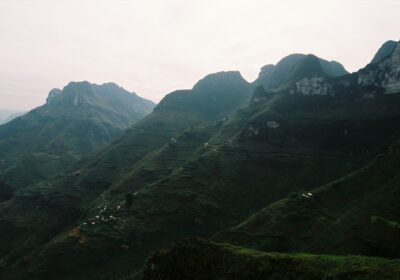
Ha Long Bay looks different in every season, and the difference is not small: a November morning can give you blue sky, flat water, and karsts sharp against the horizon, while an August afternoon can give you a grey wall of rain and a cruise that never leaves the harbour. Picking the right month matters more here than in most places in Vietnam, because the bay is an open-water trip — when the weather turns, the trip itself can be cancelled.
Short answer: the best time to visit Ha Long Bay is late October to November, with March to May as the second-best window. July to September carries the highest risk — heavy rain and typhoons — and February is the dullest month of the year. The rest of this guide walks through the weather month by month, then explains exactly what happens to your booking if bad weather cancels your cruise.
1. Ha Long Bay weather by month
The table below uses long-term climate averages from the Bai Chay weather station in Ha Long city (Vietnam’s national climate standard QCVN 02:2022/BXD). Averages describe a typical year, not the year you happen to travel in — but they show the pattern clearly: about 81% of the year’s rain falls between May and September.
| Month | High / Low (°C) | Rain (mm) | Rainy days | What it feels like on the water |
|---|---|---|---|---|
| January | 19 / 14 | ~25 | 8 | Dry, grey, cold on deck — bring a jacket |
| February | 20 / 15 | ~25 | 10–11 | Dullest month; drizzle and haze, Tet crowds |
| March | 22 / 18 | ~40 | — | Mild, some haze, warming up |
| April | 27 / 21 | ~50 | — | Warm and mostly dry; good for kayaking |
| May | 30 / 25 | ~170–183 | 12 | Warm, first swims; afternoon showers begin |
| June | 32 / 26 | ~297–300 | 16 | Hot and humid; rain arrives in earnest |
| July | 32 / 26 | ~325 | 16 | Peak storm season begins |
| August | 31 / 25 | ~431–445 | 19 | Wettest month of the year |
| September | 31 / 24 | ~276–280 | 14 | Still high storm risk, slowly improving |
| October | 29 / 22 | ~143–160 | 9–10 | Improving fast, especially late in the month |
| November | 26 / 19 | ~35–39 | 6 | Best overall balance: dry, clear, comfortable |
| December | 22 / 15 | ~18–20 | 5 | Driest month; cool, bright, quiet |
Sea temperature follows the same curve, from about 21°C in January and February to about 30°C in July and August — which is why swimming is a summer activity here, not a winter one. If you are choosing between the bays rather than the months, our comparison of Ha Long, Lan Ha and Bai Tu Long bays explains how the weather question changes when you move to the quieter water next door.
2. The best window: late October to November
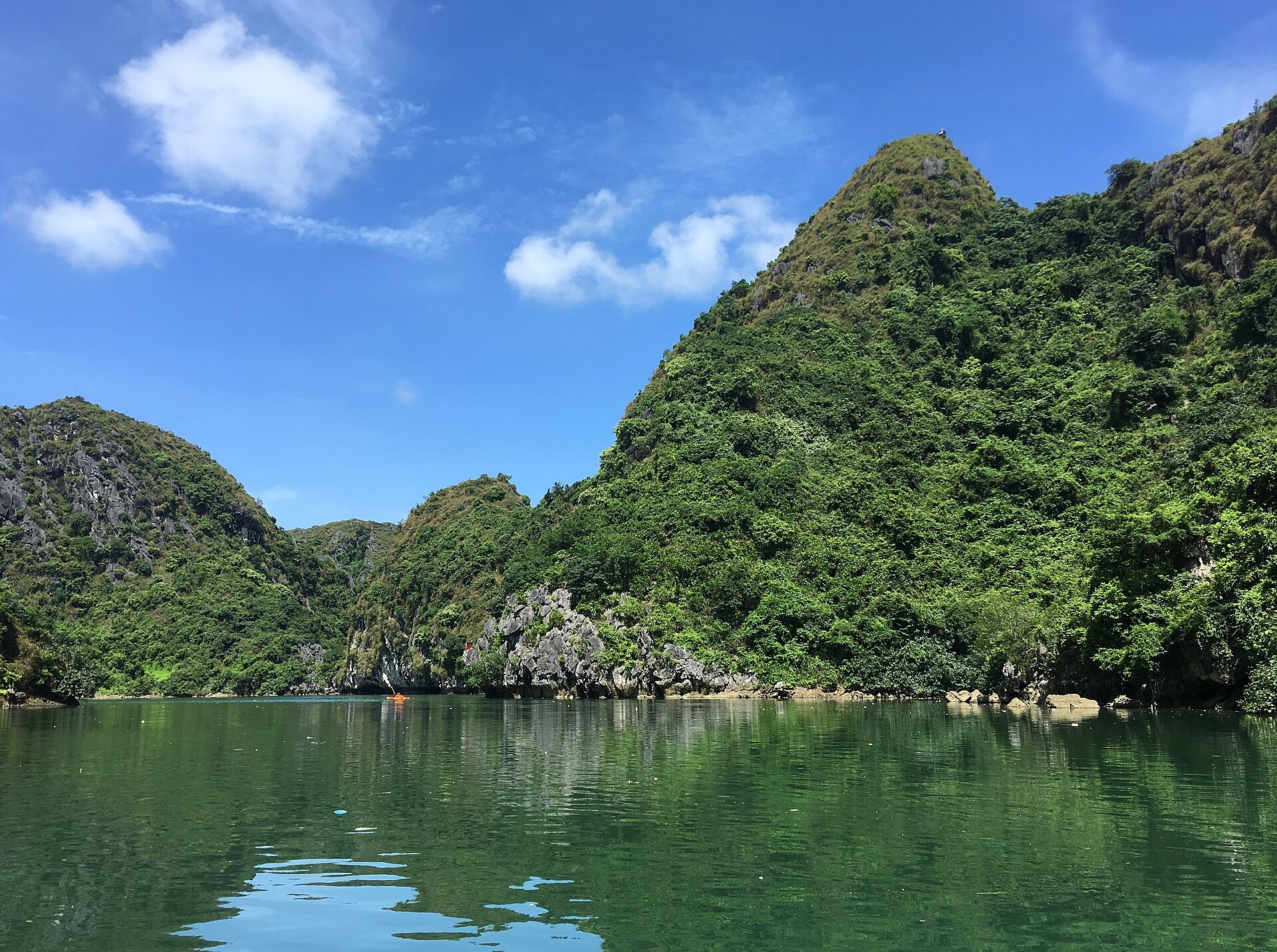
November is the month the data points to, and the month most experienced planners choose. Rainfall collapses to about 35 mm across six rainy days, daily temperatures sit around 19–26°C — warm enough to spend the day outside without the humidity that makes June and July uncomfortable — and you get about five and a half hours of sunshine a day. Late October is close behind: rain is already falling fast from the summer peak, and the air is still warm enough for swimming at Titop Island.
This is also the most reliable window for the cruise itself. By late October the typhoon season is fading, and by November it is effectively over. The risk of a weather cancellation is at its lowest, the water is calm, and the light is the clearest of the year — the karsts photograph sharp instead of dissolving into haze. The trade-off is demand: October to December is peak season, so the best cabins and the popular departure dates sell out first. Book early, and read our guide to choosing a cruise before you compare prices — the cheapest cabin on the wrong boat is still the wrong choice.
3. The second window: March to May
Spring is the runner-up, and it suits a different kind of traveller. March is mild (18–22°C) with some haze; April warms to 21–27°C with only about 50 mm of rain; May reaches 25–30°C and the sea is warm enough for swimming. Kayaking is at its best in this window — the water is calm, the air is warm but not yet oppressive, and the caves and lagoons are easy to enjoy.
Two cautions. First, February and early March have the worst visibility of the year: low cloud, drizzle, and a flat grey light that flattens every photograph. If clear views are the point of your trip, wait for April. Second, May is the month the pattern turns — rainfall triples from April to May, and the first storms of the season can arrive from late May. A May trip is usually fine, but it is the last month you can book without thinking about the forecast.
4. Summer: swimming weather, storm risk (June to September)
Summer is the contradiction of Ha Long Bay. The water is at its warmest, the swimming and kayaking are at their best, and the bay is green and alive — and it is also the season when your cruise is most likely to be cancelled. August averages about 431–445 mm of rain across 19 rainy days, the wettest month of the year, and typhoons typically affect this coast from late May to early November, with the highest frequency from July to October.
That does not mean a summer trip is a bad idea. Most summer days still run: the rain often comes as short, heavy afternoon showers, and a cruise can sail between them. What summer does mean is that you should not build a tight itinerary around a single fixed date. Keep a spare day in Hanoi, or book an overnight cruise with a flexible operator rather than a non-refundable day trip. And check the forecast from Vietnam’s National Center for Hydro-Meteorological Forecasting (NCHMF) in the days before departure — a storm warning there is the signal that matters, not a weather app. For what a summer day on the water actually looks like, see our day trip vs overnight cruise comparison and our cruise prices guide.
5. Winter: cool, misty, and quiet (December to February)
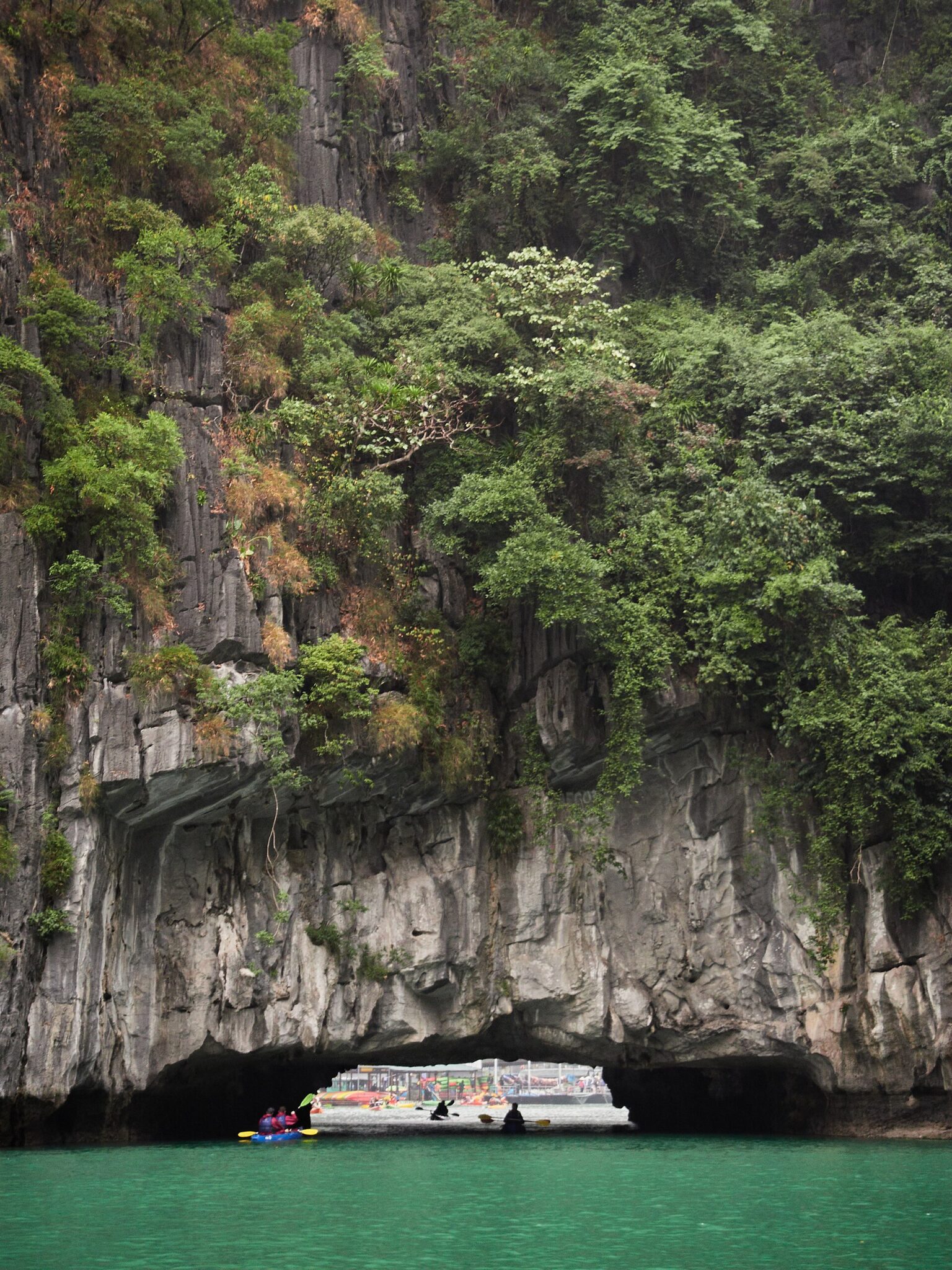
Winter is the season most first-timers overlook, and it has a real charm — if you know what you are booking. December is the driest month of the year (about 18–20 mm of rain, five rainy days) and the brightest of the winter, with temperatures of 15–22°C. The bay is quiet, the crowds are gone, and prices are at their lowest outside the Tet holiday, which falls in late January or February and brings domestic crowds and higher prices.
But winter on the water is genuinely cold. A 15°C morning on an open sundeck, with wind off the water, feels colder than the same temperature on land — bring a proper jacket, not just a light layer. January and February add drizzle and fog: the karsts emerge from the mist like a Chinese ink painting, which some travellers love and others find frustrating when the view from Titop Island is a wall of white. Swimming is out — the sea is about 21°C and nobody is getting in. If your idea of Ha Long Bay is blue water and a swim, winter will disappoint you. If it is mist, quiet, and a cabin with a view, December is one of the best months to go. The same seasonal logic applies next door: see our best time to visit Lan Ha Bay and Cat Ba guide for the quieter bay’s calendar.
6. What happens if your cruise is cancelled by weather?
This is the question that worries people most, and it has a clear answer — because the decision is not the operator’s to make. Cruising in Ha Long Bay is regulated by the port authority, which issues sailing permits daily. When a storm warning is active, when winds reach the port authority’s safety threshold, or when fog reduces visibility below a safe level, departures are suspended for every vessel equally. No operator can override that, and no operator can promise you it will not happen. Ahead of Typhoon Wipha in July 2025, for example, Quang Ninh province stopped issuing permits for all tourist boats on the bay from 2 pm that day.
What matters is what your operator does next. On Vega’s tours, the policy is:
- The authorities cancel the cruise because of bad weather: you get a full refund.
- You cancel more than 72 hours before departure: you can change the date free of charge or get a 100% refund.
- You cancel within 72 hours of departure: the booking is not refunded and the date cannot be changed.
- All refunds are paid minus a $3–7 exchange-rate difference and a 5% bank fee.
Read the full terms before you pay — they are on Vega’s tour and service booking conditions page, and the same terms are repeated on each tour page. Other operators’ terms differ, and this is the single most important thing to check before booking a cruise in storm season: a cheap ticket with a no-refund policy is expensive the day the port closes.
Three practical steps if you are travelling between June and September. First, keep your plans flexible: a spare day in Hanoi turns a cancelled cruise into a postponed one. Second, book an operator whose weather-cancellation terms you have read in writing — “full refund if the authorities cancel” is the phrase to look for. Third, if your cruise is cancelled on the day, ask immediately about the next available departure rather than waiting for the refund to process; the boats that sail the next morning fill fast. And if you are still deciding how long to stay on the bay, our 2 days vs 3 days guide explains why a longer trip gives the weather more room to clear.
7. How to pick your dates
- First trip, and the view matters most: late October to November. Driest air, clearest light, lowest cancellation risk.
- Photographer: November for sharp light, or December to February for mist — but accept that a foggy morning can hide the view entirely.
- Swimming and kayaking: April to June, or September to October. Warm water, calmer seas than mid-summer, and the caves are at their most enjoyable.
- Family with small children: April–May or October–November. Avoid the July–August heat and the February drizzle; a 6:40 am day-trip start is hard on children in any season — see our Lan Ha Bay day vs overnight comparison for the same question on the quieter bay.
- Budget traveller: January, or August–September. The lowest prices of the year, in exchange for the dullest light or the highest cancellation risk. Check the refund terms twice.
- Only one fixed date, no flexibility: book in the October–November window. If your dates fall in July–September, choose an operator with a written full-refund policy for weather cancellations and keep a backup day.
Frequently asked questions
What is the best month to visit Ha Long Bay?
November. It averages about 35 mm of rain across six rainy days, with daily temperatures around 19–26°C and the clearest light of the year — the strongest combination of dry weather and usable light. Late October is close behind. Vietnam’s official tourism site lists September to November as the best time, but September still averages about 276 mm of rain, so October and November are the safer half of that window.
When is typhoon season in Ha Long Bay?
Storms can affect the coast from late May to early November, most often from July to October. When a storm warning is active, the port authority suspends all cruise departures — the decision applies to every operator equally, and no operator can override it. If you travel in this window, check the forecast from Vietnam’s National Center for Hydro-Meteorological Forecasting (NCHMF) in the days before departure.
What happens if my Ha Long Bay cruise is cancelled because of bad weather?
It depends on the operator, so check the terms in writing before you pay. On Vega’s tours, if the local authorities cancel the cruise because of bad weather you get a full refund; if you cancel more than 72 hours before departure you can change the date free or get a 100% refund; cancellations within 72 hours are not refunded. Refunds are paid minus a $3–7 exchange-rate difference and a 5% bank fee. The full terms are on Vega’s booking conditions page.
Is Ha Long Bay worth visiting in winter?
Yes, if you go for the right reasons. December is the driest month of the year and the bay is quiet, uncrowded, and at its cheapest outside Tet. But it is cold on the water (15–22°C), mornings can be foggy, and swimming is out. If you want blue water and a swim, go in April–May or October–November instead. Our Lan Ha Bay first-timer’s guide covers the same seasonal choice for the bay next door.
Can it rain all day in Ha Long Bay?
In August, yes — it averages 19 rainy days, and a storm can close the port for a full day. In most other months, rain comes as showers rather than all-day rain: even in the wet season, a cruise often sails between showers. The real risk in summer is not a rainy afternoon but a storm warning that suspends all departures, which is why flexible dates and a written refund policy matter more than a sunny forecast.
Booking with Vega Travel
The two cruises in this guide are Vega’s own tours, with prices checked on the live tour pages on 17 November 2026:
- Leona Cruise 1-day tour — from $68 per person, 7 hours on board, daily from Hanoi.
- UniCharm 2D1N luxury cruise — from $155 per person, Deluxe Sea View cabin, Lan Ha Bay overnight. Travelling longer? See the UniCharm 3D2N cruise from $300.
Vega Travel has operated in Vietnam since 2001 and holds international travel licence 0324/2004/TCDL-GP-LHQT. Prices are per person — confirm the current price and the weather-cancellation terms on the tour page before booking.
Photo credits: Traditional junk at sunset in the mist — Argenberg (Vya) / Wikimedia Commons (CC BY 4.0). View from a kayak — Christophe95 / Wikimedia Commons (CC BY-SA 4.0). Kayakers passing through a sea cave — lumoplank / Wikimedia Commons (CC0). Limestone cliff and kayaker — Radek Kucharski / Wikimedia Commons (CC BY 2.0).