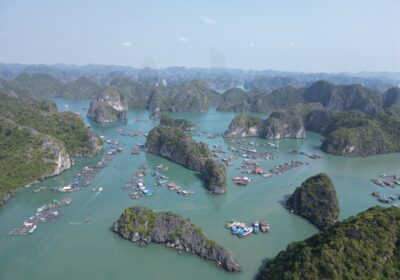
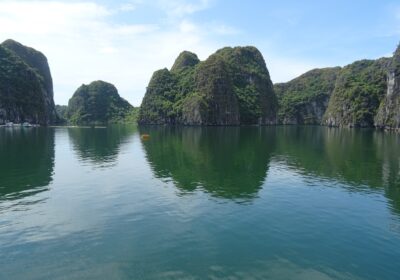
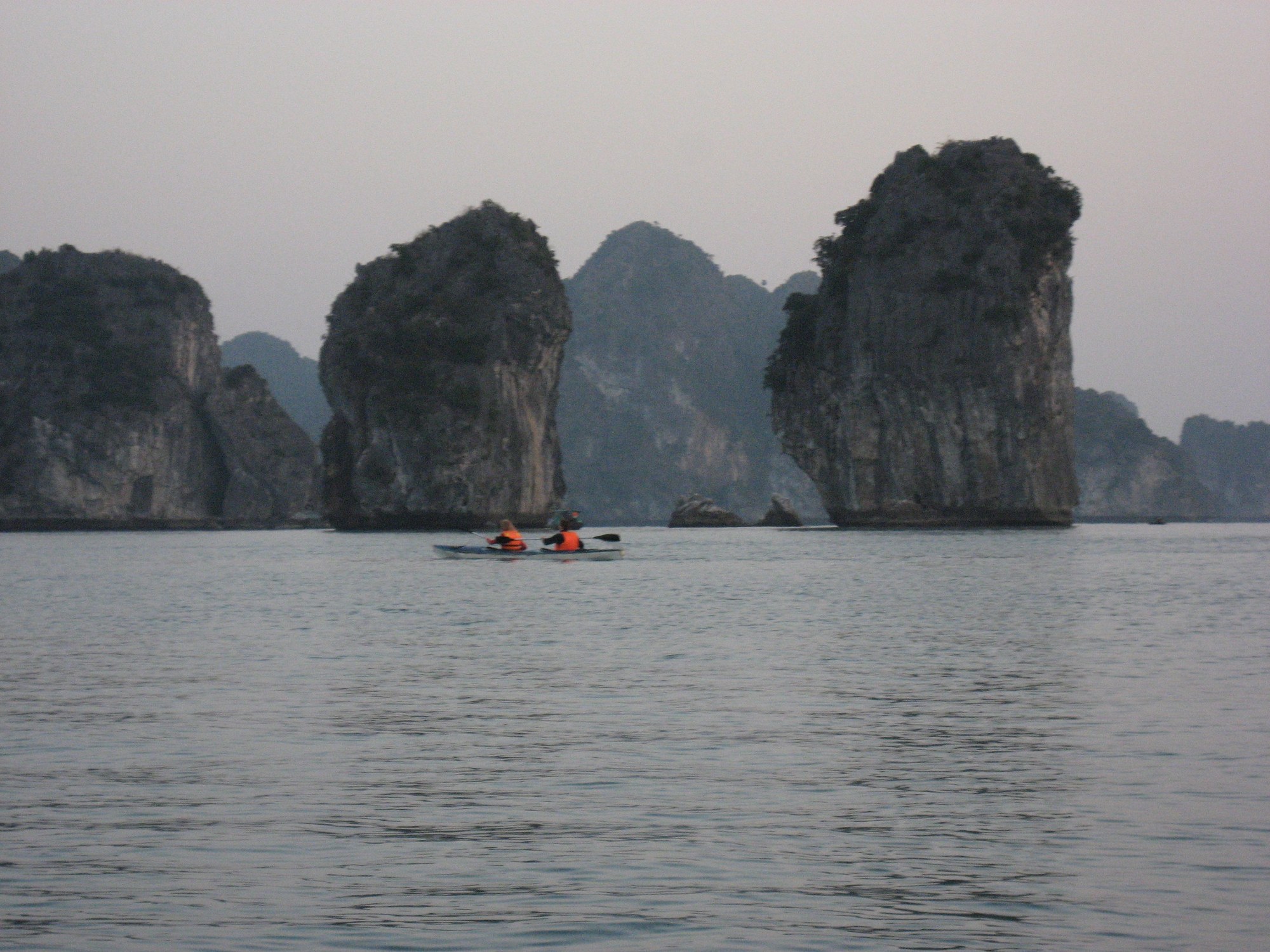
Lan Ha Bay is best seen from the water — and not from a cruise deck. From a kayak, the bay changes completely: the limestone walls close in, the engine noise disappears, and you slip through gaps in the rock that no big boat can enter. On a still morning you can paddle into a lagoon so enclosed it feels like a private lake, then come back out to open water scattered with some 400 islets. It is the single most rewarding activity in the bay, and it needs no experience at all.
This guide covers the four places that matter for kayaking in Lan Ha Bay — the cave, the two quiet lagoons and the beach — plus the tide and safety rules that decide whether your paddle is a highlight or a washout. One note first: kayaking in the bay was temporarily suspended in late 2024, and access to some spots still depends on local management decisions and the tide, so confirm with your operator that kayaking is running on your dates before you plan around a specific spot.
Dark & Bright Cave (Hang Sáng–Tối): the classic paddle
This is the paddle most people picture when they think of Lan Ha Bay. Dark & Bright Cave — Hang Sáng–Tối, also called Hang Ca or the Day and Night Cave — sits on the border between Ha Long Bay and Lan Ha Bay, inside the Cat Ba Biosphere Reserve. You reach it only by kayak or bamboo boat: cruise ships anchor outside and transfer guests to small craft.
The route runs through a low natural tunnel, about 70–100 metres long, that opens into a hidden lagoon ringed by sheer limestone cliffs and jungle. The Bright Cave (Hang Sáng) is the open, sunlit half — roughly 4 metres wide and 3 metres high — and it is the one visitors actually paddle through. The Dark Cave (Hang Tối) is a longer, darker tunnel, and its interior is currently closed to visitors because of unpredictable tides and low ceiling heights, for safety and conservation. You still get the full experience: the tunnel, the silence of the lagoon, and the mirror-calm water on the far side.
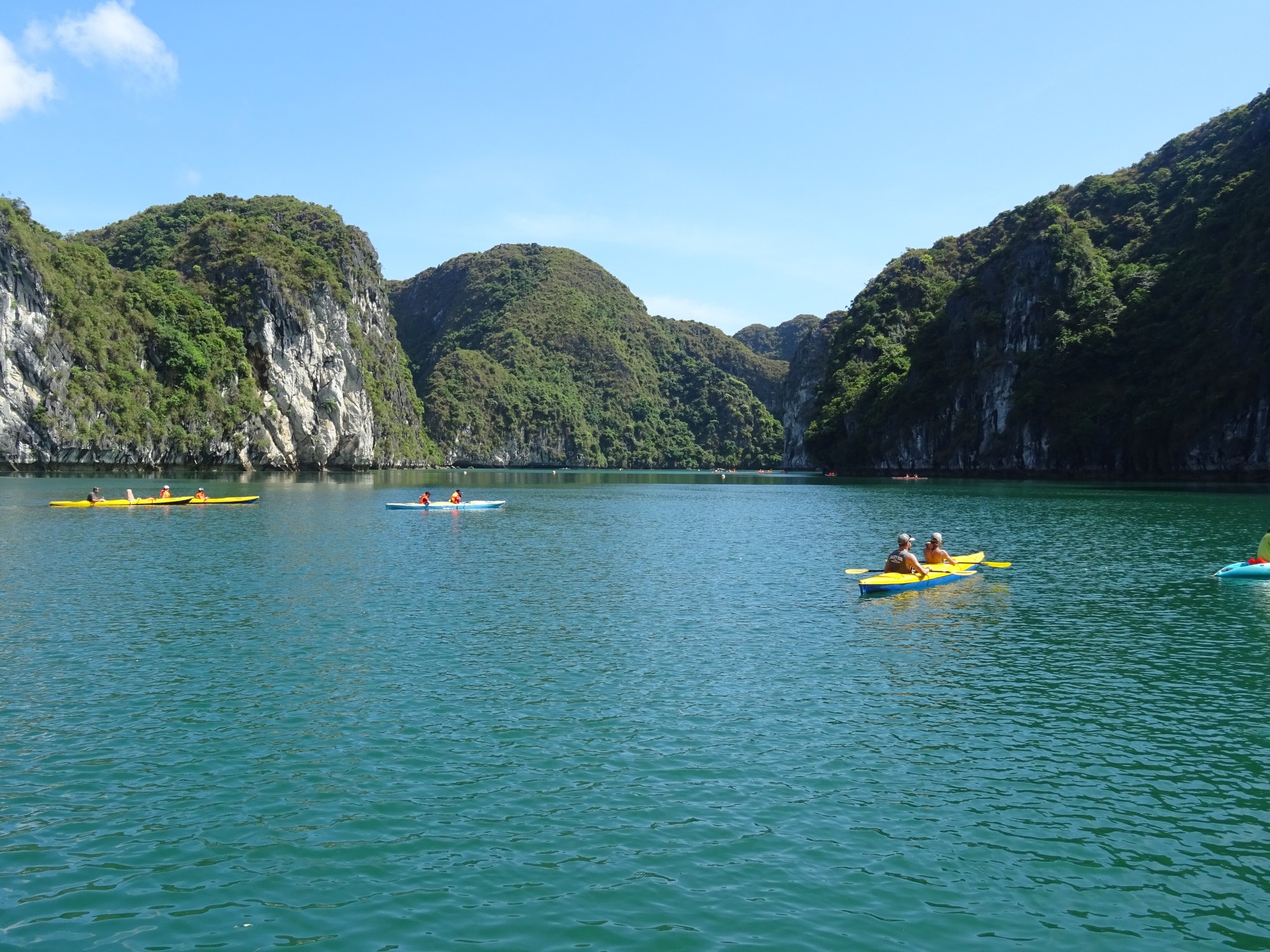
Allow 45–90 minutes for the whole stop. Operators usually schedule kayaking here in two windows when the light and the tide are best — roughly 10:00–12:00 and 14:00–16:00 — and the entrance is low enough that you may need to duck slightly at higher tides. There is a landing and visit fee of around 60,000 VND per person, normally already included in your cruise price.
Check before you book that your cruise itinerary actually lists this stop. Not every Lan Ha Bay cruise goes to the cave, and the ones that do may swap it for another lagoon if the tide is wrong on the day.
Tra Bau & Ao Ech: the quiet lagoons
If the cave is the famous paddle, Tra Bau and Ao Ech are the quiet ones — and for many kayakers, the better ones. Both are sheltered lagoons rather than caves, so there is no tunnel to time with the tide and no queue at a cave mouth. You simply paddle out from the cruise into emerald water between forested karsts.
Tra Bau is a lagoon in the heart of the bay, often paired with a swim stop. The water is calm and clear, the cliffs close around you on all sides, and it is one of the easiest places in the bay for a first paddle. Cruises on a 2-day programme often use Tra Bau for their main kayaking session.
Ao Ech — “Frog Lake” — sits on the eastern side of Cat Ba and is known for exceptionally calm, shallow water surrounded by towering karsts. Paddling here feels less like a tour stop and more like exploring: enclosed limestone walls rise straight out of the sea, and the hidden lagoons tucked behind them are the kind of places you only find from a kayak. Several luxury cruises use Ao Ech as their kayaking area on day two, when the day fleet has already headed back towards the harbour.
Between the two, Tra Bau suits a short, relaxed paddle with a swim afterwards; Ao Ech suits a longer, quieter explore.
Ba Trai Dao: beach, swim and paddle combined
Ba Trai Dao — the “Three Peaches” — is three small islets that look like giant peaches from a distance, with tiny sandy coves tucked under limestone cliffs. It is the bay’s best combined stop: you can kayak around the islets, swim in some of the cleanest water in Lan Ha Bay, and sunbathe on a beach that exists only part of the day.
That last point matters. The beaches here are tidal: at high tide the sand disappears completely under the water. The best time is mid-morning at low tide, when the sand is out and the water is calm. Plan on 1–2 hours for the stop, and ask your operator about the tide before you set your hopes on a beach afternoon — an afternoon visit at high tide is a swim stop, not a beach stop.
Kayak or bamboo boat?
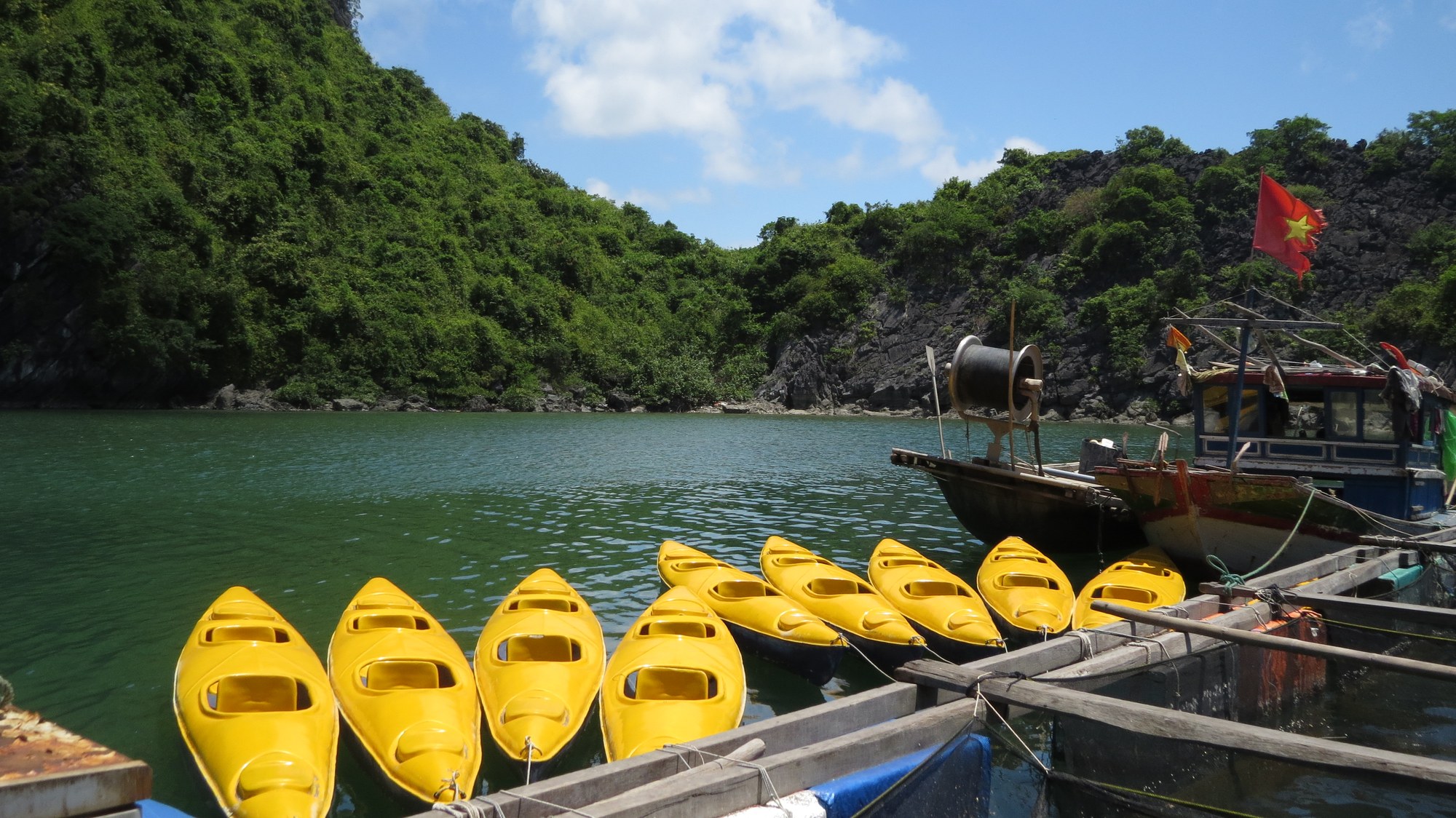
At the cave and in the lagoons you usually have two ways to get through the water: paddle your own kayak, or ride a bamboo boat rowed by a local boatman. The kayak is the better choice if you want to set your own pace and stop for photos whenever you like. The bamboo boat is the better choice if you would rather sit back, if you are travelling with small children, or if the tide makes the cave entrance too low to paddle comfortably.
Either way, wear the life vest — operators require it. Leave the phone in a dry bag: a capsized phone is the most common kayaking casualty in the bay.
Tides, weather & safety: what to know before you paddle
- Tide decides everything. Cave entrances are low — at high tide you may need to duck, and at the wrong tide a lagoon or a beach may be unreachable. Your operator checks the tide table; you just need to go when they say go.
- Best months are March–May and September–November. The water is warm, the light is good and the sea is usually calm. July–September carries the highest typhoon risk, and cruises can be cancelled for weather — see our best time to visit Lan Ha Bay guide for the full month-by-month picture.
- Morning and mid-afternoon are the paddling windows. Most operators run kayaking around 10:00–12:00 and 14:00–16:00, when the light is best inside the cave and the lagoon. Early morning can be misty and beautiful, but it is also the coldest time on the water.
- Stay with the group and the guide. The bay looks open, but the karsts create a maze — channels that look like shortcuts can dead-end in shallow water. The guide knows the route; follow them, not the gap in the rock.
- Sun protection matters more than you think. There is no shade on open water, and the reflection doubles the exposure. Sunscreen, a hat that will not blow off, and a long-sleeve rash guard are worth more than any camera upgrade.
- Do not count on kayaking alone. Because access depends on tides, weather and local management rules, an itinerary may swap one kayaking area for another — or replace kayaking with a bamboo boat ride — on the day. Treat the kayak as the plan, not a guarantee, and confirm on board.
How kayaking fits into a Vega cruise
Kayaking is included, not an add-on, on Vega’s Lan Ha Bay cruises — so the price you see is the price of the paddle too. On the UniCharm 2D1N cruise (from $155 per person), kayaking runs in the Tra Bau area on the first afternoon, after the cruise sails the hidden route from Ha Long Bay into Lan Ha Bay. On the UniCharm 3D2N cruise (from $300 per person), day two adds a trek in Cat Ba National Park, cycling in Viet Hai village, and a second kayaking session in the bay’s quieter corners.
If you want the island as well as the water, Vega’s Cat Ba Private 2D1N tour (from $169 per person for a group of five or more) spends day two kayaking on Lan Ha Bay after a day of trekking and cycling on the island — the private boat means the kayaking area can be chosen around the tide on the day, rather than fixed weeks ahead.
Either way, the transfer from Hanoi is included, so the bus, the pier and the timing are the operator’s problem — you just need to be at the pickup point. If you are still deciding between a day on the water and a night on it, our day cruise vs overnight cruise comparison and our Lan Ha Bay first-timer’s guide will help you choose.
FAQ
Do I need experience to kayak in Lan Ha Bay?
No. The kayaks are stable sit-on-top doubles, the water in the lagoons and between the islets is sheltered and usually flat, and a guide paddles with every organised group. If you can sit and hold a paddle, you can do this — most first-timers are comfortable within five minutes.
Is kayaking in Lan Ha Bay safe?
Yes, with the normal rules: wear the life vest, stay with the guide, and go when the operator says the tide and weather allow it. The sheltered water is far calmer than open sea, but cave entrances are tidal, so the operator — not the timetable — decides when a paddle happens.
Can I kayak at Dark & Bright Cave right now?
The Bright Cave and its lagoon are the part visitors paddle. The interior of the Dark Cave is currently closed for safety and conservation reasons. Kayaking access in the bay also depends on local management decisions, so confirm with your operator before you travel.
What is the best time of year for kayaking in Lan Ha Bay?
March–May and September–November: warm water, good light and usually calm seas. July–September brings the highest typhoon risk, and cruises — kayaking included — can be cancelled for weather.
Photo credits: photographs via Wikimedia Commons — see captions. Cruise prices checked against Vega’s live tour pages on 11 November 2026; confirm at booking, as prices can change. Kayaking access depends on tides, weather and local management rules — confirm with your operator before you travel.