The short answer
Most visitors meet Cat Ba Island from the water — karsts, lagoons and beaches on a Lan Ha Bay cruise. The island’s interior is a different trip, and it is worth a day of its own: a national park of forested limestone hills, a village you can only sensibly reach on foot or by boat, and a cave that was once a secret wartime hospital.
The simple version: hike the short viewpoint trail if you have half a day, cross the park to Viet Hai village if you have a full day and a guide, and add Hospital Cave on the road between Cat Ba Town and the park. Then go back to the bay. Cat Ba works best as a two-part trip — forest one day, water the next — not as a rushed add-on to a cruise.
Cat Ba National Park: what it actually is
Cat Ba National Park sits in the centre of Cat Ba Island, the largest island in the Cat Ba Archipelago off Hai Phong. Established in 1986, it covers roughly 17,300 hectares of forest and sea, and it is the ecological core of the Cat Ba Biosphere Reserve, recognised by UNESCO in 2004. Since 2023 it has also sat inside the Ha Long Bay–Cat Ba Archipelago UNESCO World Heritage property — the same listing that covers the bay you cruise on, which is a useful reminder that the forest and the water here are one landscape, not two attractions that happen to share an island.
The park’s most famous resident is also its most fragile: the Cat Ba langur, a golden-headed primate found nowhere else on Earth and listed as critically endangered, with a wild population estimated only in the tens of animals. That matters for how you visit. You are very unlikely to see a langur — they live in remote, strictly protected parts of the park, and that is exactly how it should stay. Go for the forest, the viewpoints and the walking, not for a wildlife sighting, and treat any operator that promises langurs as a red flag. Keep your distance from all wildlife, never feed monkeys or other animals, and stay on marked trails: the park’s rules exist because this forest is small, steep and genuinely rare.
The park headquarters, where most trails start, is on the cross-island road between Cat Ba Town and the north of the island. That road is also your route to Hospital Cave, so the two combine naturally into one day.
The trails: from an easy viewpoint to a full-day crossing
Ngu Lam Peak — the short, rewarding hike
If you have half a day, this is the hike to choose. The trail from the park area climbs through Kim Giao forest — ancient trees with distinctive, gnarled shapes — to Ngu Lam Peak, a viewpoint over the island’s forested hills and the Trung Trang valley. It is short, steep in places, and doable in about one to two hours return for a reasonably fit walker. Go early in the morning, before the heat builds, and take water: there is no shop on the trail, and the climb is steeper than it looks from the road.
Trung Trang Cave — the easy cave stop
Close to the park headquarters, Trung Trang Cave is a roughly 300-metre walk-through cave of stalactites and stalagmites, lit for visitors and reached by a flight of steps. It is not a trekking experience — it is a short, accessible stop that pairs well with the Ngu Lam hike or with Hospital Cave. If you are travelling with children or older relatives, this is the park experience that asks least of you and still gives you something real: a limestone cave in the middle of the island that made it.
The crossing to Viet Hai village — the full-day trek
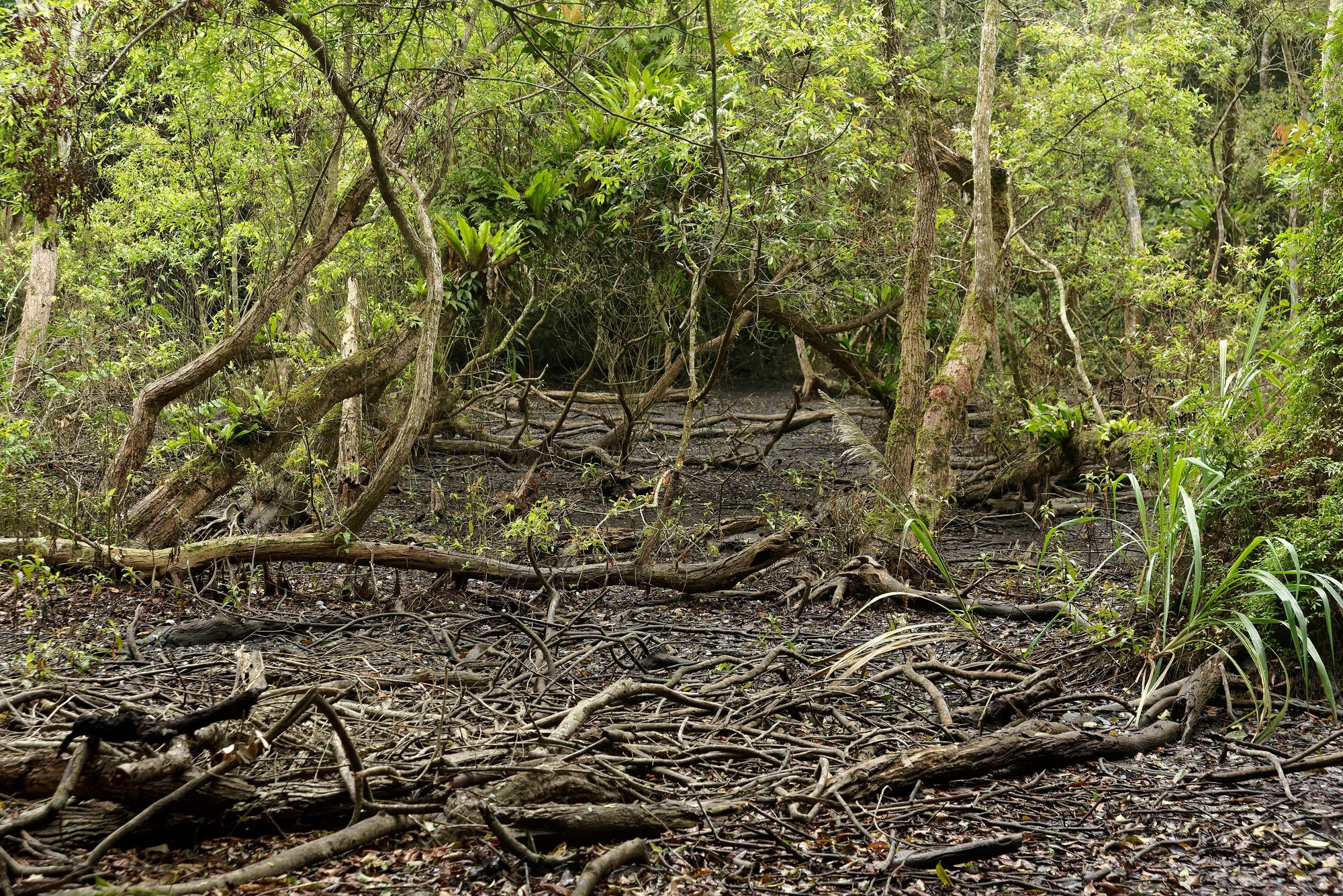
The park’s signature walk is the long crossing from the park centre to Viet Hai village, passing Ao Ech (Frog Pond) roughly halfway. Published distances and times for this route vary quite a bit between sources, which is itself useful information: this is a genuine forest trek over limestone slopes, not a waymarked park path with a fixed timetable. Plan on a full day, go with a guide, and expect to finish by boat — most trekkers return from Viet Hai to Ben Beo Pier near Cat Ba Town by water, which turns the walk into a loop that ends on Lan Ha Bay.
Do not attempt the crossing casually. It needs proper footwear with grip (limestone is slippery when wet), plenty of water, sun protection, and a guide who knows the route and the weather. In rain the trail gets muddy and slow, and in summer heat it is a much harder day than the distance suggests. If any of that sounds like too much, that is not a failure of ambition — it is exactly the judgement the next section is for, because Viet Hai can also be reached without trekking at all.
Viet Hai village: the island within the island
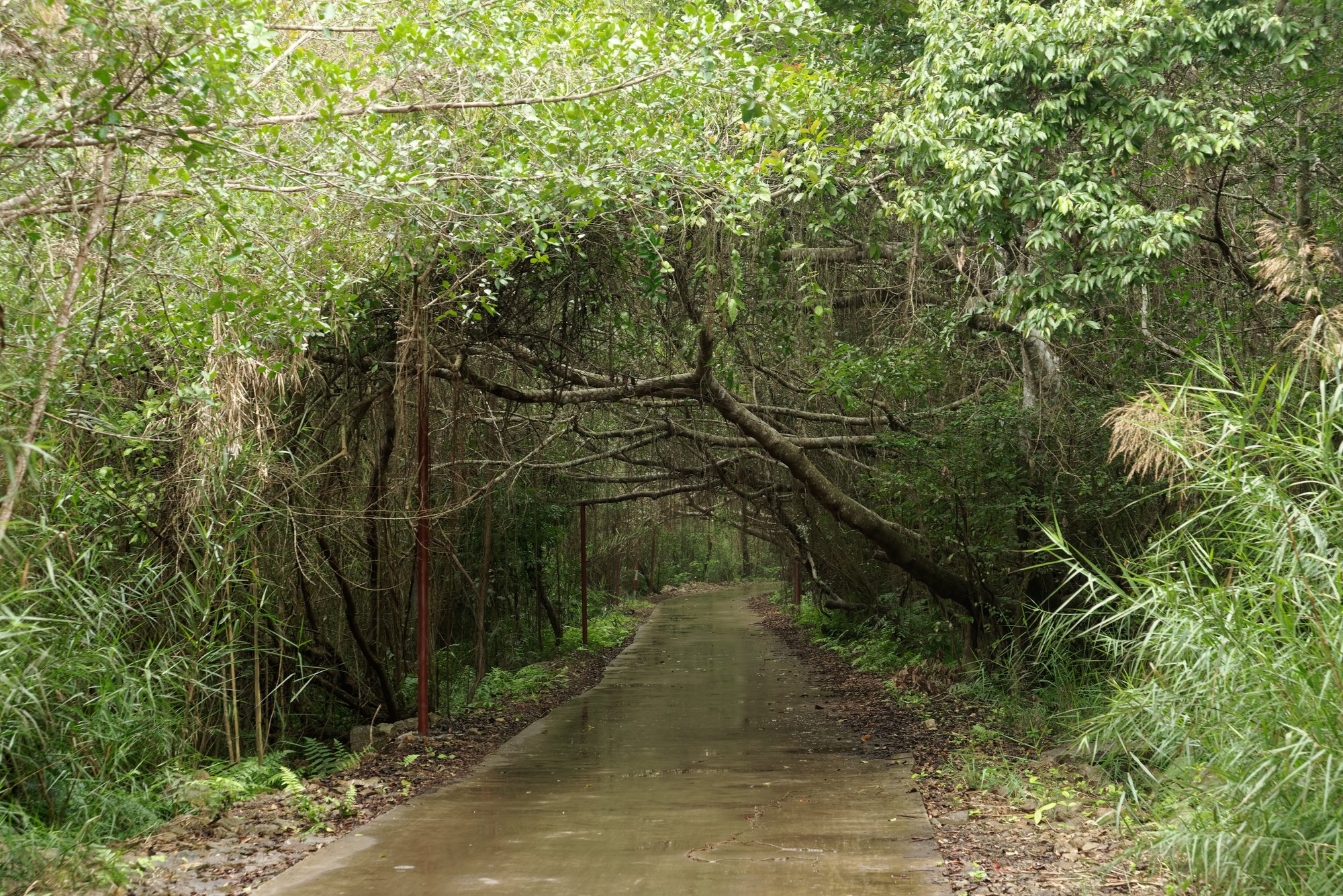
Viet Hai is a small village tucked into a valley inside the national park, surrounded by forest and cliffs, with a few hundred residents, traditional houses, fields and a pace of life that feels a long way from Cat Ba Town. Visitors often call it an “island within an island,” and the description fits: there is no road in that a tourist would sensibly use, so you arrive on foot through the forest or by boat, and then explore by bicycle along shaded paths between houses, gardens and a small harbour.
Cycling is the right speed for Viet Hai. The village is small enough to see properly in an hour or two of easy riding, with stops that are about daily life rather than sightseeing: a local school, fishing boats, vegetable plots, and the quiet at the end of the valley. A few practical points of etiquette matter here more than at a viewpoint. These are people’s homes, not a set: ask before photographing people, keep your voice down, do not wander into gardens or houses, and buy a drink or a snack locally if you can — it is a small, direct way for a visit to benefit the village.
If trekking is not for you, the boat-and-bicycle version of Viet Hai is the honest alternative, and it loses nothing essential. You still get the arrival by water, the cycling, and the valley quiet — you just skip the forest crossing. Several cruise itineraries use exactly this version: on Vega’s UniCharm cruises, a Viet Hai cycling visit features on the second morning of both the 2-day and 3-day itineraries, and on the 3-day cruise it is paired with a trek and a cave visit on Cat Ba Island. That is the right model for most travellers: let the cruise handle the logistics, and spend your energy on the village itself.
Hospital Cave: history inside a limestone hill
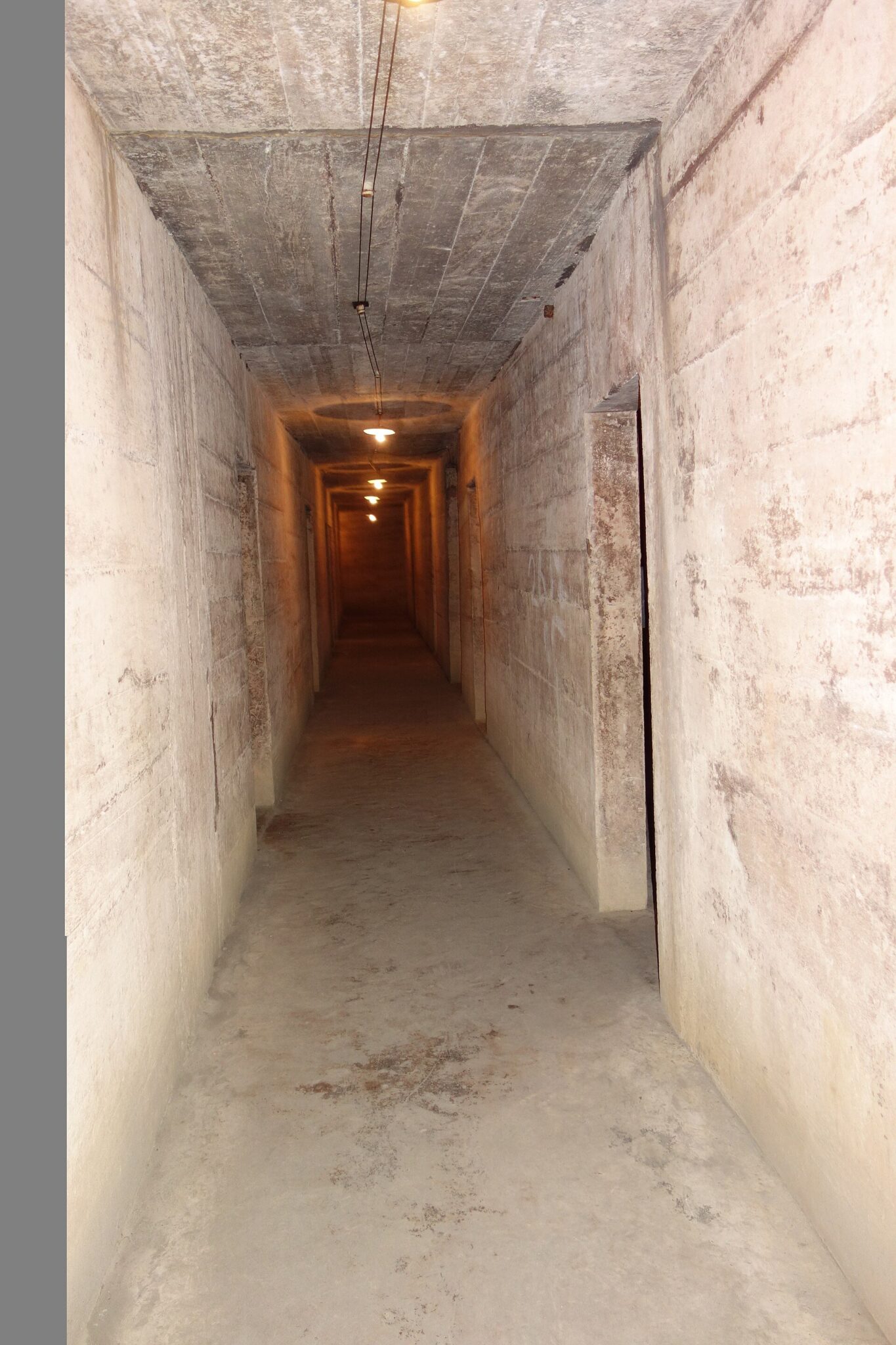
On the road from Cat Ba Town toward the park, about 10–13 kilometres out of town, sits Hospital Cave — known locally as Quan Y Cave. Between 1963 and 1965, during the American War, a natural cave here was converted into a secret, bomb-proof field hospital: three levels, 17 rooms, including operating rooms, recovery areas, a kitchen and even a small cinema, built to treat patients and shelter people during air raids. A visit takes roughly 30–60 minutes.
It is a sobering place, and it should be visited as one. There is a memorial altar to fallen soldiers inside, so dress and behave respectfully, keep voices low, and do not treat the operating rooms as a photo backdrop. Combined with a park hike, Hospital Cave gives a Cat Ba day something most bay itineraries cannot: a sense of the island as a place where people have actually lived through hard history, not just a scenic backdrop. It is an easy stop by motorbike or taxi from Cat Ba Town, and it fits naturally on the way to or from the park headquarters.
Combining the park and the bay in one trip
Cat Ba Island rewards a simple rule: give the land a full day, and the water at least a day. Trying to squeeze a forest trek, a village visit and a cruise into a single day from Hanoi is how trips become a blur of transfers.
One extra day on Cat Ba. Stay a night in Cat Ba Town, spend one day on the park and Viet Hai (trek or boat-and-bicycle, plus Hospital Cave on the road), and take a Lan Ha Bay day boat from Ben Beo Pier the next day. This is the most flexible pattern, and the best one if trekking is your priority.
A cruise that includes the island. If you would rather not organise the island yourself, choose a cruise that genuinely includes it rather than one that only sails past. Vega’s 3-day, 2-night UniCharm cruise on the Halong – Lan Ha Bay – Viet Hai Village – Cat Ba Island route (from $300 per person, price checked against the live tour page — confirm at booking, as prices change with season and cabin type) pairs two nights on the bay with the Cat Ba land day: Viet Hai cycling, a forest trek and a cave. The 2-day version gives you the Viet Hai cycling visit on the second morning without the full land day — a good middle ground if you want a taste of the island but not a trekking trip.
For a private land-and-bay option, consider Vega’s Cat Ba archipelago – Lan Ha bay 2 days/1 night (Private tour), a private two-day, one-night tour combining Cat Ba and Lan Ha Bay.
A day trip from Hanoi, honestly assessed. A park-and-bay day trip from Hanoi is possible, but it is a very long day: roughly 2–2.5 hours each way to the island plus a crossing, before any walking starts. If Cat Ba’s interior is the reason for your trip, stay overnight. If it is a bonus on a bay trip, the cruise version above is the better use of the same hours.
Whichever pattern you choose, read the itinerary before you book and check one thing: does the trip actually land on Cat Ba Island, or does it only cruise the bay’s edge? “Cat Ba” on a brochure and a day on the island are not the same promise.
Practical tips for the land side
- Best time for hiking. November to April is generally the most comfortable window for walking — cooler and drier. Summer brings heat, humidity and sudden rain, and July to September carries storm risk that can disrupt both trails and boats. The same seasonal logic as our Lan Ha Bay first-timer’s guide applies, but it bites harder on foot than on a boat.
- Tickets and cash. Park entry is charged by route, and the fee schedule changed during 2026, so do not rely on a figure from an older guide. Check the current fee at the park gate and carry cash — card payment at the gate is not something to count on. The same applies to Hospital Cave and Trung Trang Cave, which have their own arrangements.
- What to wear and carry. Grippy walking shoes or boots (not sandals), water, sun protection, a light rain layer, and a small daypack. Long trousers help on forest trails. If you are doing the Viet Hai crossing, a guide is not optional in our view — it is the difference between a trek and a lost afternoon.
- Where to base yourself. Cat Ba Town has the hotels, restaurants, motorbike rental and the Ben Beo Pier boats. The park headquarters area has far fewer services, so plan food, water and transport from town, not from the trailhead.
- Conservation, in practice. Stay on trails, take all litter out, do not pick plants or disturb wildlife, and keep noise down in the forest. The Cat Ba langur’s survival depends on exactly this kind of low-impact visiting — and on visitors not demanding a sighting.
- If the weather turns. Rain makes limestone trails slippery and boat returns from Viet Hai uncertain. Build a spare half-day into a Cat Ba stay rather than planning a trek on your last possible day, and be ready to swap a trek for Hospital Cave and the town beaches if conditions change.
Frequently asked questions
Can I visit Cat Ba National Park as a day trip from Hanoi?
You can, but we would not recommend it as a trekking day. The transfers alone eat most of the day. Stay a night on Cat Ba Island if the park is a priority.
Do I need a guide for Cat Ba trekking?
For the short Ngu Lam Peak trail and the cave stops, a guide is helpful but not essential for confident walkers. For the full crossing to Viet Hai, go with a guide — the route, the weather and the boat return all need local knowledge.
Will I see a Cat Ba langur?
Almost certainly not, and that is normal. The population is tiny and lives in strictly protected areas. Enjoy the forest on its own terms, and be sceptical of any tour that promises a sighting.
Can I visit Viet Hai village without trekking?
Yes. Arrive by boat and explore by bicycle — this is how cruise itineraries, including Vega’s UniCharm cruises, handle the village, and it is a complete experience in its own right.
How fit do I need to be for the Viet Hai crossing?
Fit enough for a full day of walking over uneven, sometimes steep limestone terrain in heat or humidity, with no easy exit halfway. If that sounds borderline, choose the boat-and-bicycle version instead.
Is Hospital Cave suitable for children?
Yes, with the usual cave caveats: steps, low light in places, and a respectful atmosphere at the memorial. It is a shorter, easier visit than any forest trek, and children often find the hospital story more memorable than another viewpoint.
Related reading: Lan Ha Bay: The Complete First-Timer’s Guide, Lan Ha Bay Day Cruise or Overnight Cruise? How to Decide and Ha Long Bay vs Lan Ha Bay vs Bai Tu Long Bay: Which Should You Choose?
Photo credits: Cat Ba National Park forest, Ao Ech (Frog Pond) and road to Viet Hai photographs by Jakubhal, licensed under CC BY 4.0 via Wikimedia Commons; Hospital Cave corridor photograph by UnkemptSail, licensed under CC BY-SA 4.0 via Wikimedia Commons. Photographs are credited in each caption.