





Lonely Planet magazine published an article sharing essential advice for traveling the length of Vietnam using various modes of transport, from planes to rented motorbikes and cars.
Joe Bindloss, an editor for the US travel magazine Lonely Planet, has visited Vietnam and noted that the S-shaped country is perfectly suited for a road trip. The variety of transportation options across its three regions makes it easy for visitors to explore the country. Furthermore, both travel and living expenses in Vietnam are “suitable for every budget.” Below are Joe Bindloss’s experiences and tips for using different modes of transport during a journey through Vietnam, from his perspective.
1. Traveling by North-South Reunification Express Train
This train journey is “the most suitable option” for visitors who want to discover all three regions of the country. The Reunification Express railway stops at most destinations along Vietnam, making it ideal for travelers who prefer flexible itineraries.
From Hanoi, travelers can take a train to Hai Phong, a trip that suits anyone planning to cruise around Ha Long Bay. The train also stops at Lao Cai station, passing through the winding northern mountainous regions (a gateway to Sapa trekking tours). Tourists wishing to travel to China can also board trains from Vietnam that connect to Kunming, China.
The North-South train passes through many beautiful coastal routes. Photo: Matt Munro/Lonely Planet
Trains are categorized: SE (Super Express) is the fastest and most modern type. TN (Thong Nhat) trains are slower, older, and less comfortable. The term “Thong Nhat Express Train” is used generally for various trains running between Hanoi and Ho Chi Minh City (HCMC). Trains SE1 and SE3 depart Hanoi in the evening and arrive in HCMC on the morning of the third day. To arrive in Hanoi in the morning, travelers can catch the SE4 or SE2 trains departing from HCMC in the evening.
There are four main ticket classes on the train: hard seat, soft seat, hard sleeper, and soft sleeper, listed in increasing order of cost and comfort. These classes are also divided into air-conditioned (AC) and non-air-conditioned options. The highest price tier is the AC soft sleeper. Some trains have Wi-Fi, but connection speeds can be slow, so travelers are advised to use an Internet-connected SIM card.
Tickets can be purchased at railway stations a few days before travel or booked online 60 to 90 days in advance. There is only one official online ticket booking address: dsvn.vn, the official website of Vietnam Railways.
2. Traveling by Bus
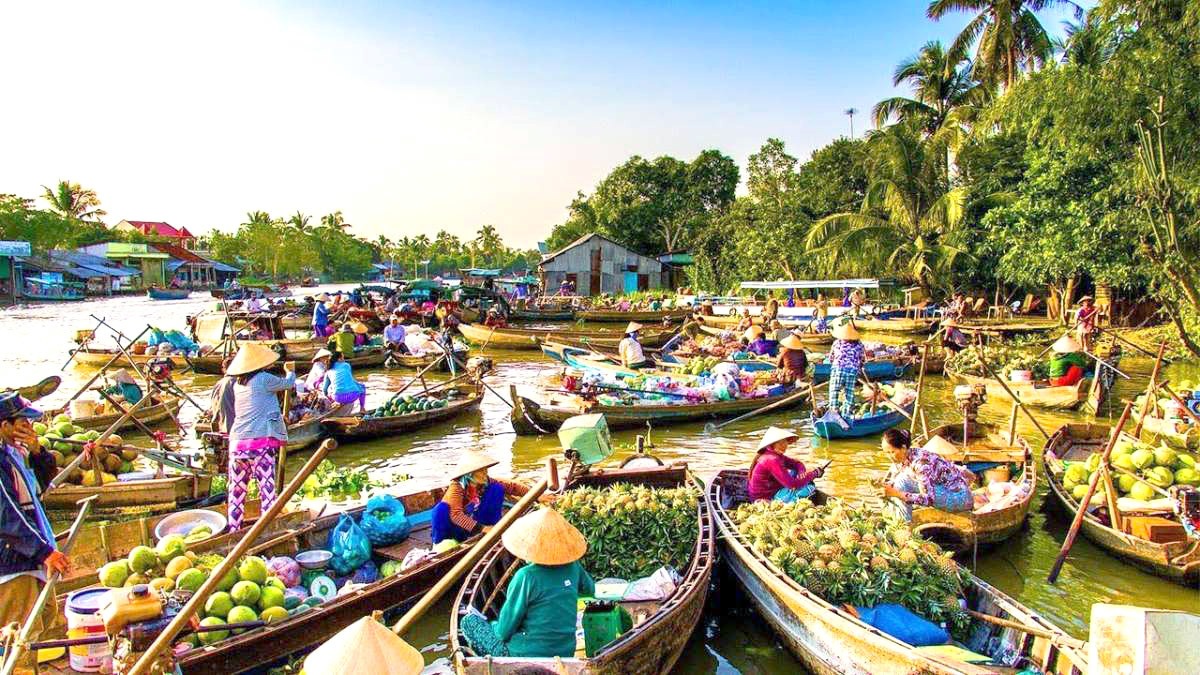
Joe Bindloss notes that buses are available in every province and city in Vietnam. Traveling by bus in Vietnam is “convenient and comfortable when moving between major cities,” but can be quite “slow and crowded in some local areas, especially in the Mekong Delta.” The biggest advantage of this mode of transport is its low cost.
The Lonely Planet editor mentions that in major tourist areas like Hanoi and HCMC, visitors will see signs advertising “Open Tour” or “Open Ticket” buses. These services provide buses running between major cities, and travelers can hop on and off at any point along the route. However, the cost of these services is often higher than regular station buses. In return, the stops are usually in convenient, central locations.
When taking a regular inter-city bus, travelers should carefully check the stop to ensure they board at the correct terminal and buy tickets a day in advance. Services vary between bus companies, and seating options often range from comfortable sleeper beds to soft seats. The travel magazine advises carrying earplugs when taking buses in Vietnam to avoid noise from drivers playing sentimental music or martial arts films on the bus. Another point to note is that inter-provincial bus trips often stop for quite a while to wait for passengers or pick up passengers along the way. Regardless of whether you book a sleeper or a seated ticket, the travel time by bus is never quick.
3. Motorbikes for Adventure Seekers
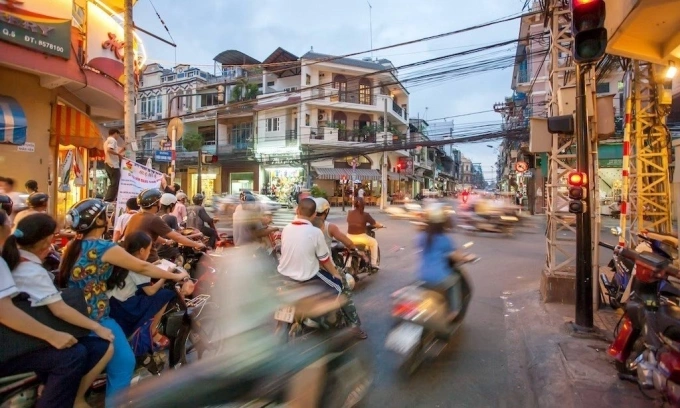
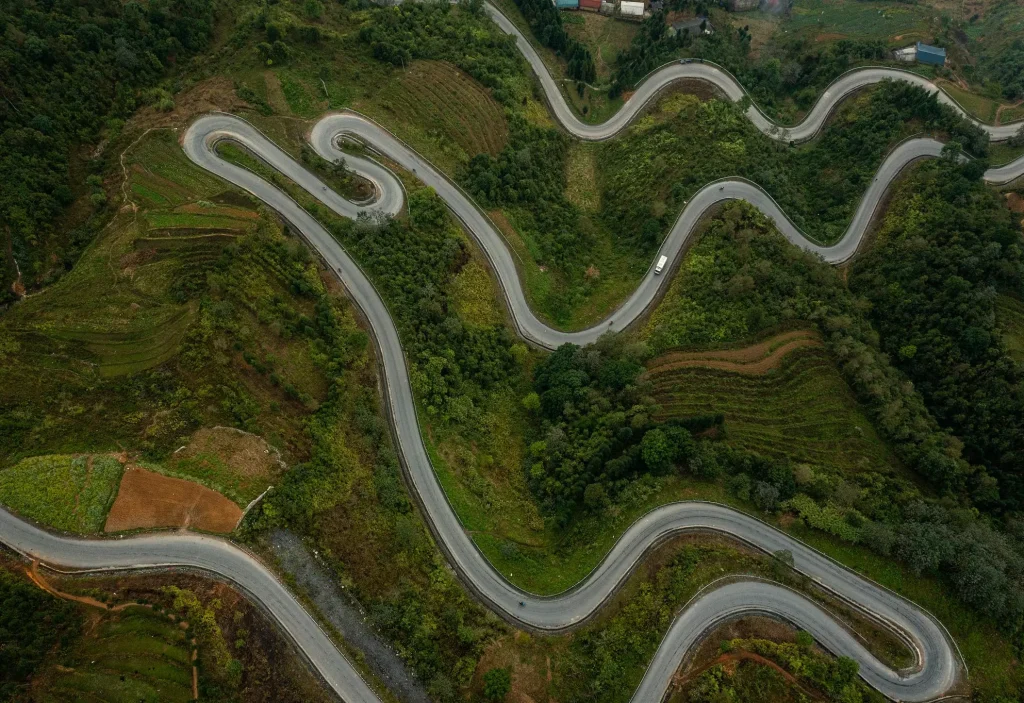
A motorbike journey along Vietnam is “the dream of many travelers,” passing through every kind of terrain, from mountains to the coast. Tourists can easily rent a motorbike to make the trip between Hanoi and HCMC. However, riding a motorbike in Vietnam is not for inexperienced drivers. Additionally, some places offer poor-quality rentals. Travelers should thoroughly check the vehicle’s condition when renting at a hotel. It is best to rent a bike through a travel agency or specialized rental shops where bikes are regularly maintained.
Travelers should also choose rental companies that offer insurance and clear contracts. You will be covered in case of an accident if you wear a helmet properly. In some areas, locals offer guided rides (Easy Rider) for about $30 per day.
Motorbikes are a common mode of transport in Vietnam. Photo: lichtbildfotograf
If an accident occurs in Vietnam without valid documentation and an International Driving Permit (IDP), travel insurance often struggles to cover costs, including damages. Many tourists drive without the proper paperwork, which means accepting significant risks associated with road traffic accidents.
4. Renting a Car with a Driver
Renting a car with a driver is a sensible option for tourists new to Vietnam and unfamiliar with local traffic conditions. Hiring a chauffeur makes the trip much easier. Drivers often double as tour guides and may even suggest additional, off-itinerary destinations. Furthermore, travelers do not have to worry about the rental and driving paperwork.
Local travel agencies often offer various packages for car rental with a driver, with customizable itineraries. Costs typically range from $60 to $150 per day, excluding fuel. Drivers cover their own food and accommodation expenses. Travelers can share the trip with others to reduce costs. A two-wheel-drive (2WD) vehicle is suitable for the plains, while a four-wheel-drive (4WD) is better for the mountainous terrain in the north.
5. Domestic Flights
Domestic flights significantly save travel time. However, flight delays and cancellations occur frequently. Airlines operating domestic routes in Vietnam include Bamboo Airways, Pacific Airlines, Vietjet Air, and Vietnam Airlines. Currently, Dien Bien Phu airport is closed until 2024, meaning there are no domestic air routes to the Northwest during this time. Travelers are forced to use ground transportation when heading there.
6. Traveling by Waterway
Travelers can choose to move by boat to offshore islands such as Phu Quoc, the islands scattered around Nha Trang Bay, Cu Lao Cham near Hoi An, and the islands and islets in Ha Long Bay, Bai Tu Long Bay, or Con Dao, Vung Tau, and Can Tho. Sea transport routes may be disrupted during the rainy and storm season from May to October. Travelers should monitor weather forecasts to proactively adjust their schedules if planning to travel by waterway.
7. Cycling to Explore the Local Pace of Life
Tourists can rent bicycles from hotels or travel agencies to explore the locality. For long-distance trips, travelers should rent a high-quality bicycle through a specialized bicycle tour company such as Vietnam Cycling or Indochina Bike Tours. When required to cross high-speed highways, travelers should switch to a bus or train, securing the bicycles on the bus roof or in the