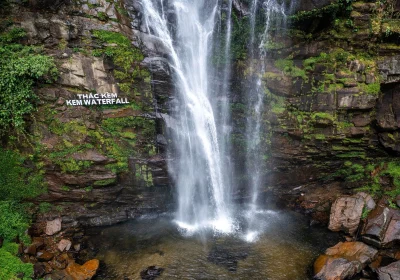






In the borderlands of Vietnam’s Northeast, Cao Bang Province unfolds as a vibrant tapestry of mountains, clouds, and winding mountain passes. Every curve and every slope reveals not only a majestic natural landscape but also tells a story of a region rich in identity, where historical and cultural imprints blend with pristine beauty. From the legendary Ma Phuc Pass, the poetic Khau Lieu, to the challenging Khau Coc Cha Pass, a journey across Cao Bang’s mountain roads is an invitation for those with a thirst for discovery and a love for freedom—to touch the clouds and embrace the lush green hues of the border.
Ma Phuc Pass – A Masterpiece Amidst the Mountains
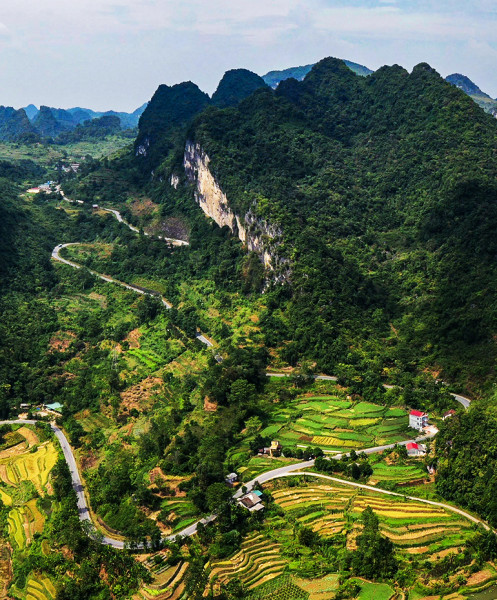
Ma Phuc Pass is located on National Highway 3, approximately 22 km northeast of the provincial center. The pass spans nearly 3.5 km, winding through seven vertical tiers amidst towering limestone peaks. Most notably, the summit features two colossal stone mountains standing erect, resembling the figure of a kneeling horse, which inspired its impressive name, “Ma Phuc” (Kneeling Horse). Looking down from above, the pass road appears like a soft silk ribbon draped across the vast green expanse of the forest.
The Legend of the Kneeling Horse
Folklore tells that in ancient times, the Cao Bang region was often invaded by northern enemies. During one fierce battle, a general riding his warhorse chased the enemy to the top of the pass when the horse suddenly knelt and refused to move further. The general understood this to be an omen from the mountain god, so he stopped his troops, set up an ambush, and ultimately won the battle. To commemorate the good omen, the locals named the place Ma Phuc Pass. Today, Ma Phuc is not only a crucial road connecting the province’s administrative and economic center with the eastern communes but also an attractive tourist destination. Visitors often pause here to admire the magnificent scenery, listen to the legend of the “kneeling horse,” and feel the sacred spirit of this border region.
Khau Coc Cha Pass – The Challenging Road

Located on National Highway 4A, Khau Coc Cha Pass connects Tuyen Quang and Cao Bang provinces. This steep pass features 14 challenging hairpin turns, forming 15 sheer tiers that make the road look like a dramatic living monument—a staircase leading up to the sky.
In winter, dense fog envelops Khau Coc Cha, turning it into one of the most demanding passes in Cao Bang. However, conquering the summit rewards travelers with a panoramic view of the vast valleys nestled at the foot of the mountains. This is not just a test for the steering wheel, but a cultural experience, passing through the Dong Mu Valley, home to the famous Xuan Truong sticky rice. Along the way, travelers can admire stilt houses, savor ethnic cuisine like xoi ngu sac (five-colored sticky rice), roasted meat, Cao Bang duck noodle soup, and interact with the friendly local people. The ideal time to experience Khau Coc Cha Pass is during the ripened rice season, from late September to November. At that time, the glistening terraced rice fields at the base of the pass, merged with the early morning sea of clouds, create a mesmerizing natural painting.
Na Tenh Pass – A Ribbon of Silk Amidst Nature
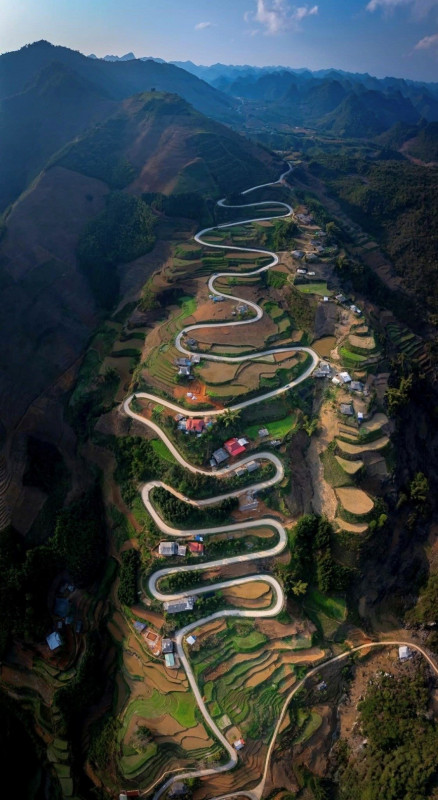
This pass is situated on National Highway 4A, about 15-18 km from Khau Coc Cha Pass. This route offers an enchanting and poetic journey for backpackers and motorcyclists. It isn’t overly steep but possesses a quiet, gentle beauty. The road traces the mountainside, embracing terraced fields and peaceful villages. The landscape changes with the seasons: cherry and plum blossoms blanket the area in white during spring; golden ripe rice colors the hills in autumn; and in winter, mist and clouds softly drift.
The Legend of Na Tenh
Na Tenh Pass is tied to the legend of a maiden named Na Tenh, the beautiful and gentle daughter of the village elder, who was also gifted at singing Lượn (a folk song genre). Whenever she sang, her clear voice echoed to the mountaintops, making birds stop flying and streams cease their murmuring to listen. One day, in the village elder’s dream, the Mountain Mother appeared and spoke: “This land is sacred, but the roads are perilous, and the people suffer from the high mountains. If someone with a pure heart dares to sacrifice for the village, the mountain will open the way, turning difficulty into ease.” The next day, the elder recounted the prophecy. While the whole village fell silent in fear of sacrifice, only Na Tenh stepped forward and whispered: “For the village, I offer my heart. If the road is opened, please grant the people peace and bountiful harvests.”
She then walked to the highest cliff, where only sharp cat-ear stones and thick fog lay. She sang a long Lượn song, her voice crystalline and far-reaching. The sky and earth shook, and clouds gathered into soft silk ribbons descending to the base of the mountain. A great wind suddenly rose, sweeping her into the white mist. Her body transformed into a soft ribbon of silk that embraced the mountainside, winding through 20 graceful curves, opening a new path. From then on, the locals traveled easily, the fields flourished, and the village prospered. To commemorate her, the people named the road Na Tenh Pass—a testament to the pure heart and sacrifice of the girl who became the silk ribbon of the mountains. Today, when the sun rises and white mist swirls, the elders tell their children that it is the maiden Na Tenh flying in the sky, protecting the peaceful village.
Conquering the mountain passes of Cao Bang is more than a drive test; it is an opportunity to immerse yourself in nature and enjoy the fresh air of the high mountains. For adventurers and trekkers, these are ideal destinations to capture spectacular “Instagrammable” photos and preserve unforgettable moments in this land of magnificent natural wonders.
(By Thanh Binh – Cao Bang Online Newspaper – baocaobang.vn – Posted September 19, 2025)